



B2B Appointment Setting for SaaS: A Practical Playbook
Who to call, what to qualify before a demo, when to dial and how to hand off, using numbers from our own B2B calling.



A SaaS demo that doesn't show up costs your account executive an hour and costs you the deal you thought was in the pipeline. Most of the fixes happen before the meeting is booked.
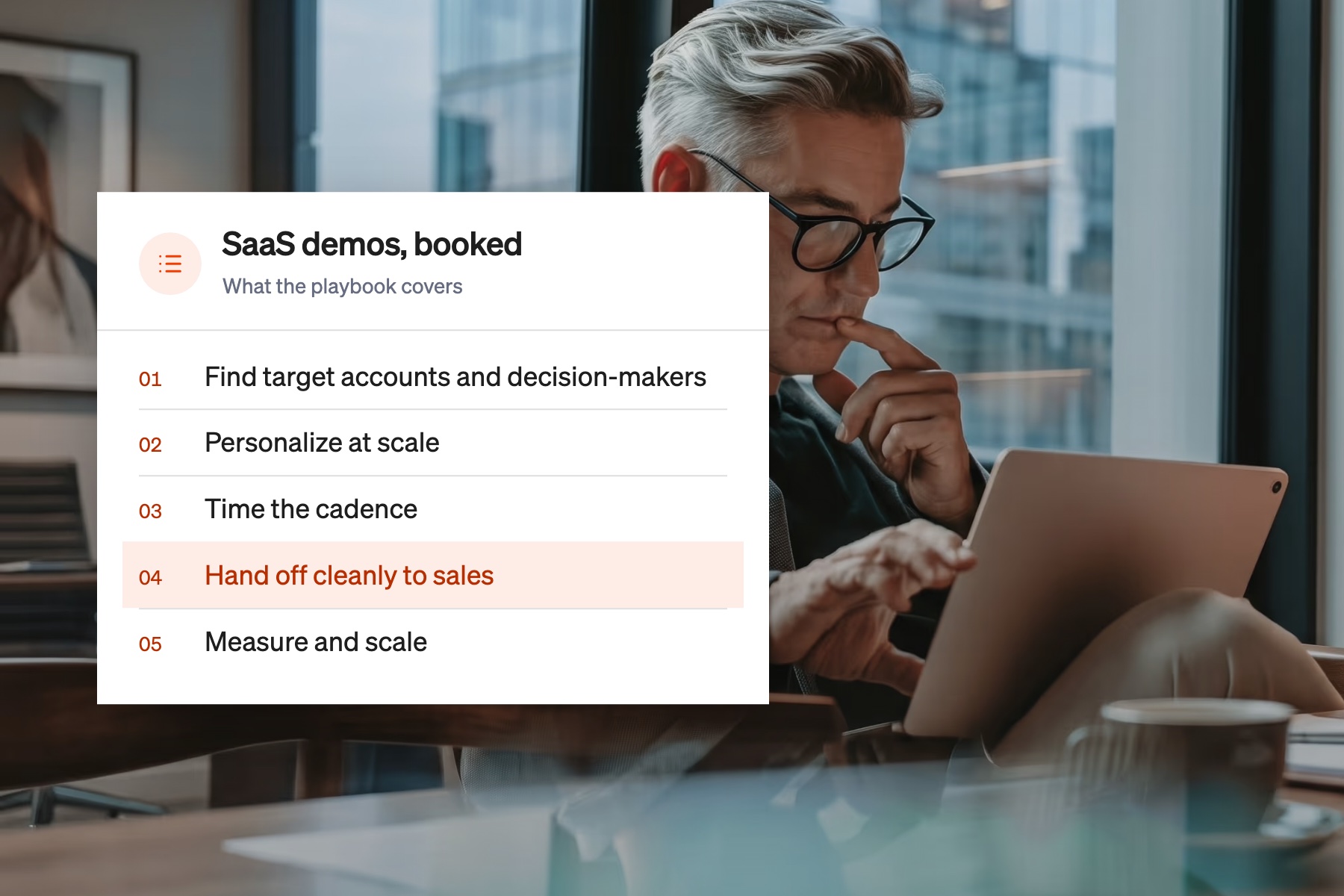
We make phone calls for a living. This playbook covers how we set appointments for software companies: who to call, what to qualify before a demo goes on the calendar, when to dial, and how to hand the meeting to your AE. The numbers come from our own calling, and we link to the studies behind them. Client results from these programs are on our B2B SaaS lead generation page.
Three things make software harder to book than most B2B services.
More people decide. A mid-market software purchase usually involves a user, a manager who owns the budget and someone in IT or security. Booking a demo with only the user often produces a friendly meeting and no deal.
The buyer already has something. Very few SaaS prospects have no tool. They have a competitor, a spreadsheet or an internal build. Your caller needs to find out which one, and how happy they are with it.
Timing is tied to contracts. A prospect with eleven months left on an annual contract needs a follow-up date. A prospect whose renewal is 60 days out needs a demo this month.
Start with the customers you already win. Look at company size, industry, the tools they run and how they bought from you. That gives you an ideal customer profile you can defend, instead of one built from a wish list.
Then name the roles in each account. For most of our SaaS programs that means three:
We usually open with the budget owner and use what we learn to reach the others. When the first call reaches a user instead, we ask who else would sit in on an evaluation. That question is often how we reach the rest of the committee.
List quality decides how much of this is possible. Across our programs, 10 to 25% of dials reach a decision-maker. When a program sits at the low end of that range, we check the list before we change the script.
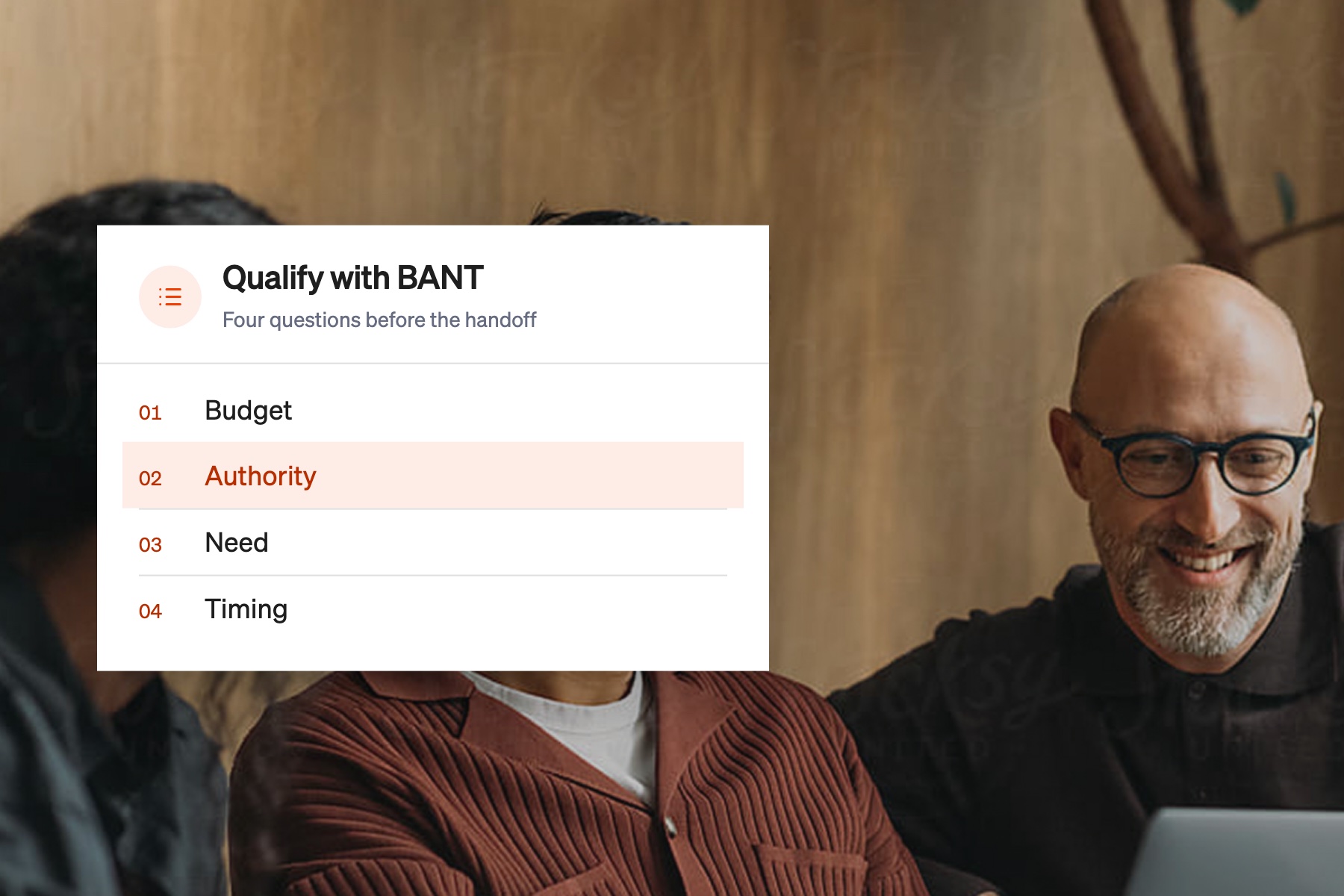
Agree on the qualification questions with your sales team before the first dial. These are the ones we ask most often for software clients:
If you already use a framework such as BANT, CHAMP or MEDDIC, we fold these questions into it. Our qualification framework comparison covers the differences.
Write down what doesn't qualify, too, so the caller sets a follow-up date instead of booking a demo your AE will cancel.
Timing matters more than most cadence templates admit. In our study of 40,000 outbound calls, dials between 4 and 5 p.m. connected 21.4% of the time and dials from 10 a.m. to noon connected 18.7%. Dials after 5 p.m. connected 6.1% (the full timing study). The same study found that Tuesday and Wednesday produced 44% of demos from 29% of the week.
Plan for more than one attempt. Of the appointments in our internal dial study, 23% were booked on the first call attempt, 32.1% on the second and 20.2% on the third. A campaign that stops after the first call leaves more than three quarters of its meetings on the table.
Each follow-up should carry something new: a relevant result, a question about their renewal, or a short note on what a peer company changed. "Just checking in" gives the prospect a reason to ignore you.
Email and LinkedIn touches can support the calls. Whether we use them depends on the program and your buyers. The phone is where the qualification happens.
Gatekeepers are part of SaaS calling too, especially at larger accounts. Our gatekeeper guide covers what our callers say.
A booked meeting is only useful if your AE walks in prepared. Before every demo, our team sends the account executive:
Agree on the booking rules during setup: whose calendar we book into, how much notice the AE needs and how confirmations work. A prospect who doesn't remember why they agreed to the meeting is easy to lose before it starts.
Then close the loop. We review meeting feedback with your sales team every week. If your AEs say a type of meeting isn't converting, we change who we call or what we ask. We use that review to decide what to change next.
Watch the last two most closely. A program that books meetings your AEs don't want only adds cost.
Both work. The choice usually comes down to time, management capacity and how much you want to test before you hire.
An in-house SDR team gives you full control and keeps product knowledge inside the company. It also means hiring, training, ramp time and a manager. An outsourced team starts faster and spreads the management load, but it has to learn your product and your buyers first.
Our in-house vs outsourced SDR analysis compares the costs and timelines in detail. For what an outsourced program costs, see our pricing page. If you're comparing providers, our rankings of appointment setting companies explains what to ask each one.
Not every software program is about demos. ReScale, a SaaS platform that connects consumer packaged goods brands with co-manufacturers, needed verified information on thousands of manufacturing facilities. Over a program that has run for more than 20 months, our US-based team made 3,894 research calls and held 508 conversations with decision-makers. That came to a 13% contact rate and 134 manufacturer profiles updated on their platform (read the ReScale case study).
The same work applies to appointment setting: a clear target list, questions agreed with the client, callers who understand the industry and weekly reviews of what the calls turn up.
Our programs follow three steps, described in full on our B2B appointment setting services page:
80% of our clients stay with us for 18 months or longer.
If you want to see whether appointment setting fits your sales motion, book a discovery call. If we're not the right fit, we'll tell you.