



Warm Calling vs Cold Calling: What Changes, and What We Do on Real B2B Calls
A warm call is one the prospect has a reason to expect. The difference matters less than most people think, and here is what we see across tens of thousands of dials.
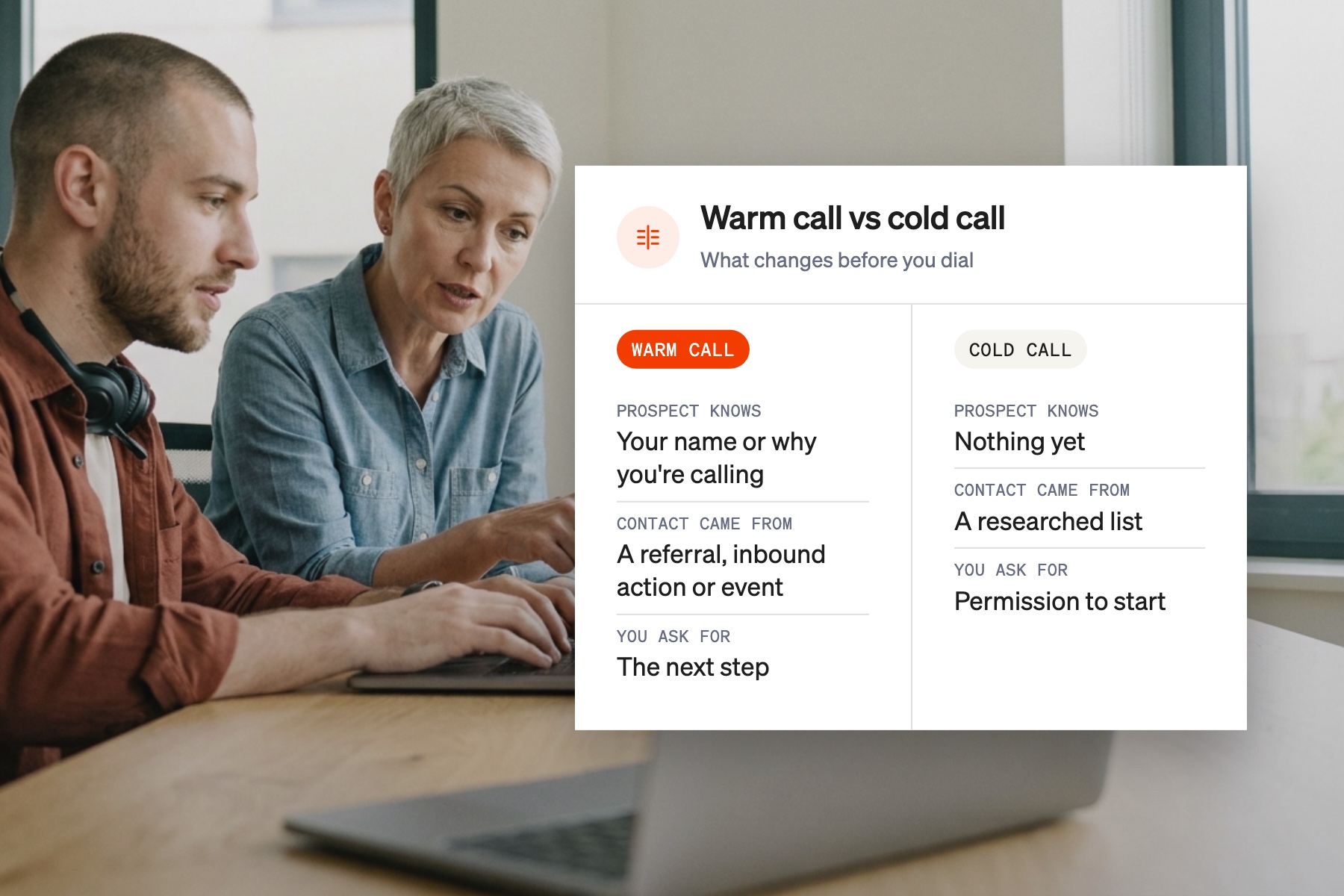



A warm call is a call the prospect has some reason to expect. A cold call is one they don't. That is the whole difference, and it matters less than most people think.
We make phone calls for a living. Most of the calls our BDRs place start cold and finish warm, because the second call is always warmer than the first. Here is how we think about the two, with the numbers we see across tens of thousands of dials.
Warm calls connect more often. Cold calls scale. A pipeline that depends only on warm calls runs dry the week your referrals do.
Four things turn a stranger into someone who takes your call.
A referral. Someone the prospect trusts mentioned you. This is the warmest call there is, and the hardest to produce on demand.
An inbound action. They downloaded something, booked a demo, asked a question on your site. They know your name, even if they don't remember it.
A prior touch. They opened an email, accepted a LinkedIn connection, or spoke to your rep three months ago. The call picks up a thread instead of starting one.
An event. You met at a trade show, or they attended a webinar. A short window exists where the call is expected.
None of these require the prospect to be interested. They only require that the call makes sense to them in the first seven seconds. That is what warmth buys you: a reason to keep listening.
A cold call in 2026 is not a stranger reading a script to a random number. On our programs it looks like this:
So the first call is cold in the strict sense. The prospect did not expect it. But it is researched, timed and relevant, and that closes most of the gap. We covered the same point from a different angle in Is cold calling dead?
Across our programs, between 10 and 25% of dials reach a decision-maker. That is a cold number: the prospect had no warning. Most of those conversations go through a receptionist first, and our guide to getting past the gatekeeper covers what our BDRs say.
Two examples from client work:
Both lists were cold on day one. Any program that runs for more than a few weeks starts producing second and third touches with people who already know the BDR's name. That is the part of the warm-vs-cold debate that gets missed: a cold calling program produces its own warm calls.
The first call is rarely where the appointment happens. It is where the second call gets earned.
We log the outcome of every conversation. A decision-maker who was interested but busy gets a follow-up call at the time they named. One who wanted information gets an email the same day and a call after it. One who asked us to try again later goes back into the sequence with a date.
We use more than one channel. Email follow-up runs alongside the calls, and LinkedIn touches are part of selected programs, so the next dial has something to refer back to, like a note sent on Tuesday about the prospect's Dallas facilities.
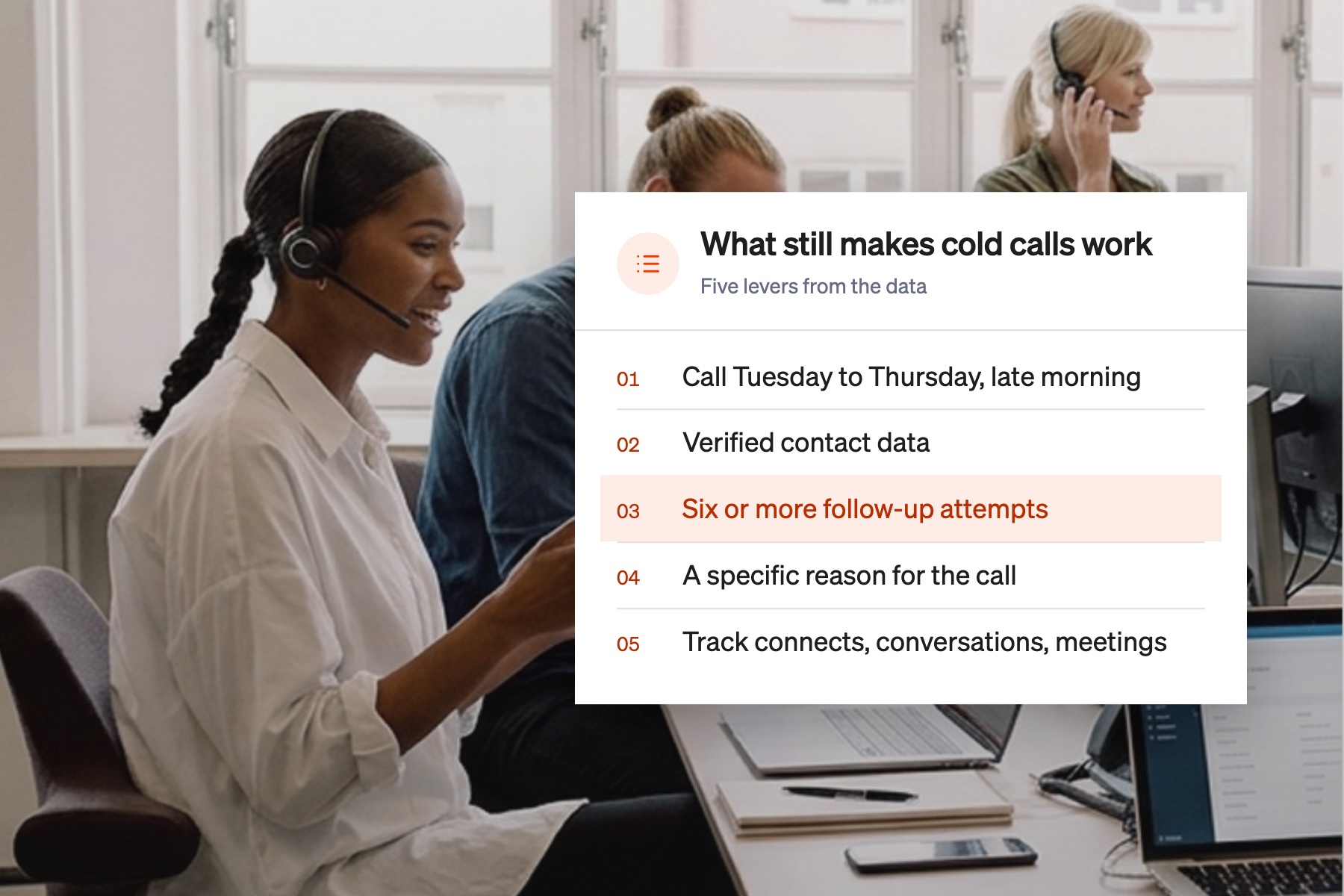
We keep calling. In the industry data, 93% of conversions happen after six or more follow-ups, and most reps stop after one or two. Our BDRs work a sequence, not a single attempt.
We call when people answer. Wednesdays and Thursdays ran 5 to 10% above other weekdays in our 40,000-call study, and Tuesday plus Wednesday produced 44% of the demos from 29% of the week. Timing is the cheapest way to warm a call.
By the third touch, the call is warm by any practical definition. The prospect knows the BDR, knows the company and knows why we keep calling. Nobody referred us. We built the warmth ourselves.
I'm not saying warm calls are a bad idea. If you have referrals and inbound leads, call them first, call them fast, and let nothing sit for more than a day.
But three situations make a warm-only plan a problem.
You don't have enough inbound. Many B2B companies selling a considered service get only a handful of qualified inbound leads a month. A handful of leads will not keep a sales team busy.
Your referrals don't scale. Referrals come when they come. You cannot ask a happy client for three more introductions every Monday.
Your sales team is waiting. A rep who only calls warm leads spends most of the week waiting for marketing. The 100-call method exists because volume is what makes outbound predictable.
If your pipeline needs 15 qualified meetings a month and inbound delivers 4, the other 11 are coming from a cold list, whether you call it or we do.
Use this as the decision:
Most of our clients run the first option. They have a product that sells, a team that can close, and not enough conversations. Our B2B cold calling services supply the conversations, and our appointment setting turns them into meetings that show up.
Per call, yes. A warm call connects and converts more often because the prospect has context. Per month, it depends on how many warm contacts you can produce. A researched, well-timed cold calling program usually delivers more meetings in total because it is not limited by referrals or inbound volume.
Calling a prospect the day after they downloaded a pricing guide from your site, or calling a contact a current client introduced you to by email. In both cases the prospect knows your company before the phone rings.
Research the company and role before dialing, call in a window when decision-makers answer, log the outcome, and follow up on the date and channel the prospect prefers. By the second or third touch, the call is warm.
Across our programs, 10 to 25% of dials reach a decision-maker. In our 40,000-call study, the best hour of the day connected 21.4% of the time and the worst connected 6.1%. If your team is under 10%, the list, the timing or the opener is the usual cause.
See what a program would look like for your market. Schedule a conversation with us.