



Cold Calling Statistics 2025: What 10 Million Calls Taught Us
Insights from 10 million cold calls reveal effective B2B strategies, optimal timing, and the importance of data quality for successful outreach.
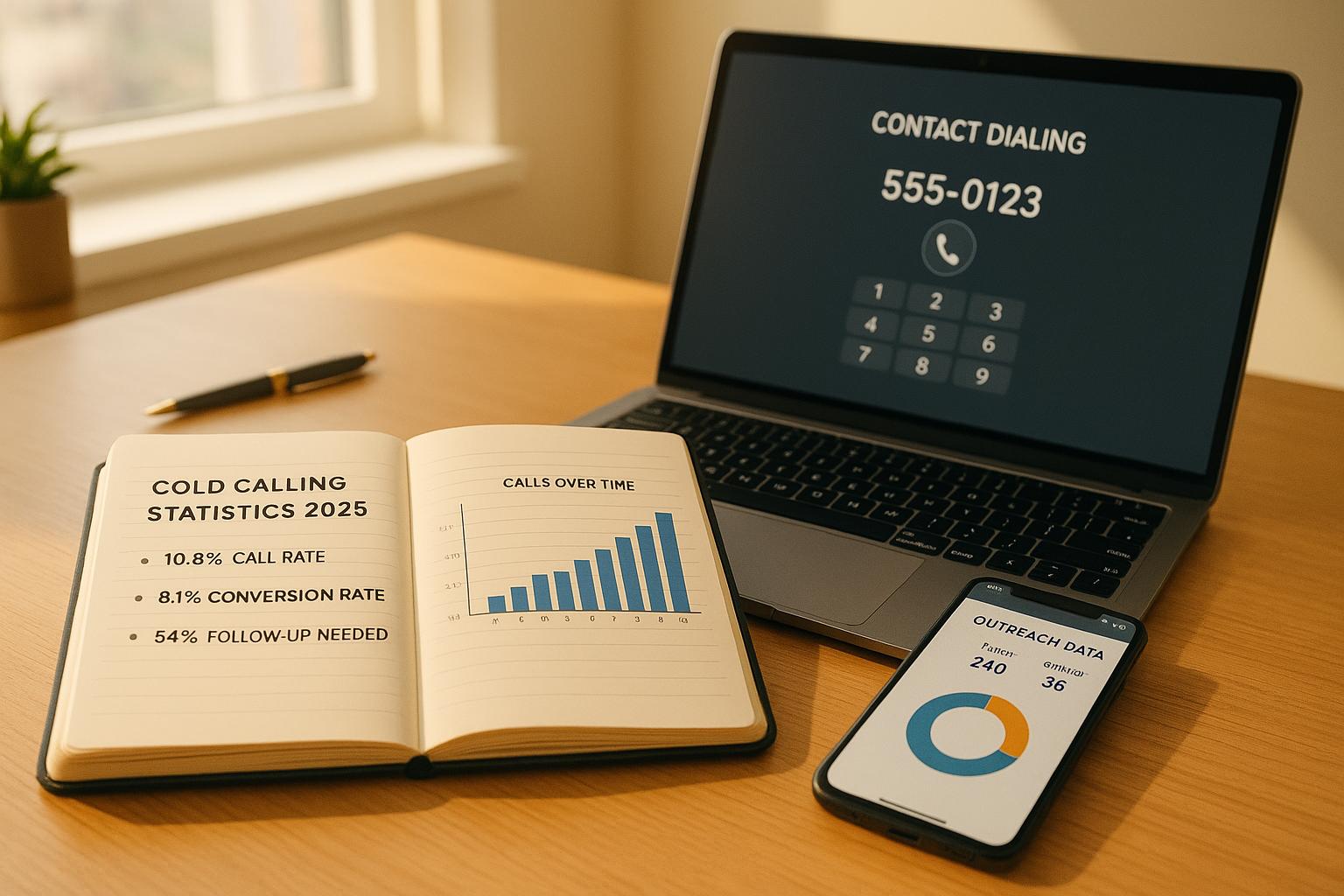



Cold calling is still a highly effective B2B sales method in 2025, as shown by analyzing 10 million calls made between 2024 and early 2025. Here's what the data reveals:
These insights help refine sales strategies, improve connection rates, and optimize outreach efforts for better results.
Having accurate, verified prospect data is a game changer for cold calling campaigns. It ensures sales teams connect with the right people, making their efforts far more effective.
This section dives into the numbers that show just how much data quality impacts cold calling success.
Accurate data is at the heart of successful cold calling. As ZoomInfo puts it:
"Quality data is the fuel of any successful sales team. Without it, your cold calls will fall flat and your prospects will remain unreachable." - ZoomInfo
The numbers back this up in a big way:
Regularly refreshing and validating data isn’t just a good practice - it’s essential for improving outreach and driving better sales results.
Timing and frequency play a critical role in cold calling success. By understanding when prospects are most likely to answer and how often to reach out, sales teams can significantly improve their chances of connecting with decision-makers. Let’s dive into actionable insights on how to optimize these factors.
Research shows that mid-week days - like Tuesday, Wednesday, and Thursday - are typically the most productive for B2B cold calls. Early in the week, professionals are often busy catching up on tasks, while end-of-week distractions can make it harder to reach them. Timing within the day also matters. The sweet spot for calls tends to be after the morning rush and just after lunch, when people are more likely to pick up and engage. Of course, results can vary depending on the role of the prospect and their region, so tailoring call schedules to your specific audience is always a smart move.
It’s not just about when you call - it’s also about how often. Striking the right balance in call frequency is essential. Too few attempts might mean missed opportunities, while excessive follow-ups can annoy prospects and hurt your chances. The key is to space out calls enough to keep prospects engaged without overwhelming them. For example, campaigns that combine calls with other outreach methods - like emails or social media messages - often see better results. Additionally, keeping a manageable daily call volume ensures that each conversation feels personal and thoughtful, rather than rushed or rehearsed.
Breaking down the day into segments reveals distinct advantages and challenges for each time period. Here’s what the data from 10 million calls shows:
Time Period Typical Connection Trend Best For Common Challenges Morning High Senior decision-makers Competing with morning tasks and tight schedules Afternoon Moderate Mid-level managers Post-lunch energy dips and meeting overlaps Evening Lower overall Certain small businesses Respecting personal time and work-life balance
Morning calls often catch decision-makers as they plan their day, but you’ll need to navigate their busy schedules. Afternoons are great for more in-depth conversations, though energy levels and meeting conflicts can pose challenges. While evening calls are less common, they can be effective for specific groups, like small business owners who may be more accessible outside traditional hours.
A well-rounded cold calling strategy leverages the strengths of each time period and adapts to the needs of your target audience. By aligning your efforts with when prospects are most likely to engage, you can maximize the impact of your outreach.
After analyzing 10 million calls, we've pinpointed strategies that help sales teams connect, engage, and close deals more effectively. Below, we break down some key methods to refine your cold calling game.
The first few seconds of a call are critical. Instead of starting with vague introductions or generic questions, lead with something specific and relevant. Mention a recent trend, challenge, or development in the prospect’s industry, and then tie it to a solution you can offer.
A strong value proposition does three things: it identifies a problem, backs it up with evidence, and suggests a clear next step. Prospects are far more likely to stay on the line when you present benefits in a clear, direct way rather than relying on broad or empty promises.
Cold calling works best when it’s part of a broader outreach strategy. Combining calls with well-timed emails and social media interactions, like personalized LinkedIn messages, can significantly improve response rates. For instance, you might start with a LinkedIn connection request, follow up with an email offering useful insights, and then reference those interactions during your call. This layered approach builds familiarity and trust before you even pick up the phone.
Using multiple channels helps your outreach feel more natural and less intrusive. For example, sending a short, value-packed email before a call can establish credibility, while engaging on social media helps create a sense of recognition and rapport.
Real-world examples show just how effective these strategies can be. A mid-market software company saw connection rates soar by replacing generic scripts with targeted research and social engagement. A manufacturing firm improved their appointment-setting success by referencing current industry trends during their calls. Meanwhile, a professional services company increased lead quality by fine-tuning their call schedules and adopting a multi-touch approach. Even technology startups have seen a jump in demo rates by blending social selling with targeted cold calls.
These examples highlight a key takeaway: personalized outreach combined with a thoughtful, multi-channel strategy can make cold calling far more impactful.
Leads at Scale takes cold calling to the next level by using insights from 10 million calls to fine-tune their strategies. Their data-driven approach focuses on creating quality connections, which forms the backbone of their process. Every step is designed to deliver noticeable improvements in cold calling outcomes.
Using high-quality data, Leads at Scale creates highly focused prospect lists. As they put it:
"Our US-based Business Development team builds highly-targeted prospect lists and strategically reaches decision-makers within your target market. We find the right people at the right companies."
Every lead is carefully vetted, achieving an impressive 30% contact rate with decision-makers.
Leads at Scale’s US-based Business Development Representatives bring a personal touch to outreach efforts. With expertise in B2B sales, they achieve a 14.5% success rate in having meaningful conversations with decision-makers. Their emphasis on building relationships and delivering value makes cold calling more effective.
Cold calling yields the best results when it’s integrated into a broader outreach strategy. Leads at Scale collaborates closely with your sales team, handling prospecting, qualification, and follow-up so your team can focus on closing deals. As one representative explained:
"We become a seamless extension of your sales organization, handling all prospecting, qualification, and follow-up. Your team focuses purely on closing deals."
This partnership approach includes regular updates on the sales pipeline and detailed prospect data. The results speak for themselves: a 181% increase in sales opportunities, closing ratios that jump from 11% to 40%, and a 9.25% conversion rate from conversations to qualified appointments.
An analysis of 10 million cold calls has uncovered patterns that distinguish effective B2B outreach from wasted effort. These findings offer a clear guide for businesses aiming to boost lead generation and sales through smarter, data-backed cold calling strategies.
The data highlights four key factors for successful cold calling: prioritizing quality over quantity, timing outreach effectively, adopting multi-touch strategies, and using accurate contact data. Businesses that focus on building precise prospect databases see significantly better contact and conversion rates compared to those with broad, unfocused lists.
Timing plays a pivotal role. Decision-makers are most receptive to calls during certain windows, with mornings and mid-week outreach consistently yielding the best results.
Multi-touch strategies stand out for their effectiveness, layering various outreach methods to build engagement over time. Additionally, verified and accurate contact data dramatically improves connection rates and minimizes wasted effort.
These findings form a practical framework for improving cold calling outcomes.
Using these insights, you can refine your cold calling strategy with some targeted adjustments.
Precision targeting and consistent, multi-channel outreach are essential for successful cold calling - and these principles are at the core of what Leads at Scale offers. Their US-based Business Development Representatives leverage insights from millions of calls to optimize every step, from prospect research to appointment scheduling.
Keeping your contact data accurate and current is crucial for effective communication. Regularly review and clean your lists by cross-referencing details from trusted sources like CRM systems, social media profiles, or data enrichment tools. Automating these processes and scheduling routine updates can help you spot and eliminate outdated or incorrect information, which in turn lowers bounce rates and enhances engagement.
You can also verify contact details during calls or conversations. This simple step ensures your information remains up-to-date and relevant, strengthening your connections with prospects.
To make cold calling work alongside email and social media, start by leveraging platforms like LinkedIn to research and connect with potential leads before picking up the phone. This step helps establish some familiarity and makes your call less of a surprise. After your call, follow up with a personalized email that directly addresses the prospect’s specific needs - tailoring your communication can significantly improve response rates.
For a smooth multi-channel strategy, keep your messaging consistent across all platforms. Use tools or analytics to track prospect behavior and find the best times to reach out. This approach allows you to fine-tune your outreach efforts, making it easier to nurture leads and boost your chances of turning them into customers.
Sales teams looking to boost engagement should focus their efforts on calling prospects between 8:00 AM and 11:00 AM on Tuesdays and Wednesdays. Studies consistently show these times and days have the highest connection rates. To improve success, aim to reach out 6 to 8 times per prospect during these peak hours.
For even better results, consider scheduling calls during mid-morning or late afternoon (4:00 PM to 5:00 PM). Don’t forget to align your call times with the prospect’s local time zone. Sticking to these optimal windows can make a big difference in both engagement and conversion rates.