

Appointment Setting and Lead Generation: The Complete Guide to Building a Full-Funnel Pipeline

Appointment Setting and Lead Generation: The Complete Guide to Building a Full-Funnel Pipeline

Lead generation alone won’t grow your revenue. Without appointment setting, leads sit idle, and sales pipelines stall. Combining these two processes bridges the gap between interest and action, ensuring your sales team connects with decision-makers ready to engage.

Here’s why this matters:

  • 43% of B2B sales teams struggle with too few qualified meetings.
  • Campaigns that integrate lead generation and appointment setting see 35–50% higher close rates.
  • Appointment setting reduces no-show rates by up to 75% and improves conversion rates.

What’s the key? Appointment setting turns leads into scheduled meetings by qualifying prospects, addressing their needs, and ensuring they’re ready to talk. It’s the critical step that transforms raw data into actionable opportunities.

Want to build a system that delivers steady, qualified meetings? This guide breaks it down – step by step.

The Ultimate Guide to B2B Appointment Setting

What Is Appointment Setting Lead Generation?

Appointment setting is all about turning qualified leads into scheduled sales meetings – getting decision-makers to commit to a conversation with your sales team. It’s not just about gathering contacts or sending out generic emails. Think of it as the bridge that takes interest and turns it into real engagement.

Here’s how it works: lead generation builds a database of verified prospects by identifying and nurturing your target audience. Then, appointment setting steps in, using tailored calls, emails, and LinkedIn outreach to secure meetings with these qualified leads. This process involves analyzing responses, qualifying prospects based on their pain points and budgets, and scheduling meetings with automated reminders to ensure attendance.

Why does this matter? Because campaigns that combine both lead generation and appointment setting achieve 35–50% higher close rates compared to those that separate the two functions. You might have a CRM full of contacts, but if no one is actively moving them from “interested” to “scheduled,” your sales pipeline won’t move forward.

"Appointment setting is where automation stops and the human touch starts. No matter how advanced your CRM or outreach software is, you can’t replace the empathy, tone, and adaptability of a skilled SDR." – SalesAR

Understanding this process shows exactly where appointment setting fits into the bigger sales picture.

Where Appointment Setting Fits in the Sales Funnel

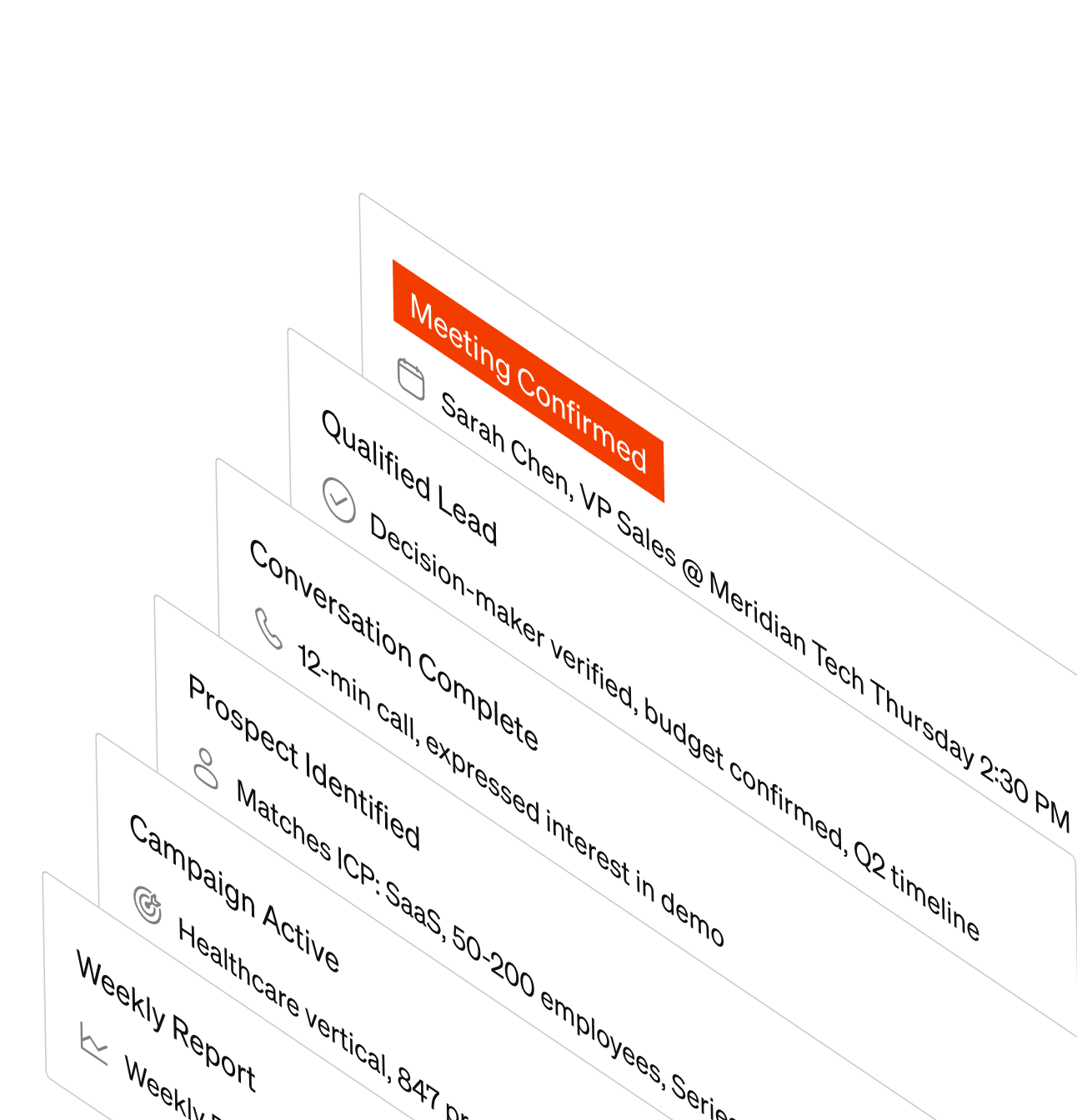
The B2B sales funnel follows a clear progression: Awareness → Interest → Engagement → Meeting → Deal. Lead generation handles the earlier stages, attracting attention and identifying potential buyers. Once interest is established, appointment setting takes over, moving prospects from curiosity to a commitment.

While lead generation fills the funnel with data, appointment setting activates it by filtering out unqualified prospects through lead qualification and ensuring sales reps only engage with high-intent decision-makers. In industries like B2B SaaS and IT, up to 30% of qualified meetings convert into active sales opportunities. That kind of conversion rate happens only when the middle of the funnel – engagement and meetings – is managed with precision.

Professional appointment setters also achieve an average meeting show rate of 75–85% through consistent reminders and follow-ups. A booked meeting doesn’t mean much if the prospect doesn’t show up. To prevent no-shows, reminders are sent at key intervals: 24 hours, 2 hours, and 15 minutes before the scheduled time.

How Appointment Setting and Lead Generation Work Together

Lead generation and appointment setting aren’t separate; they’re two pieces of the same puzzle. Lead generation gets things moving by filling your database with verified prospects that match your Ideal Customer Profile (ICP). Appointment setting provides direction, guiding that interest into scheduled meetings.

Without lead generation, appointment setters waste time chasing bad data or unqualified leads. Without appointment setting, leads sit idle in your CRM, never converting into opportunities. Many teams make the mistake of thinking lead generation alone is enough. But even with thousands of validated contacts, you won’t see results if no one is taking the next step.

Modern appointment setting combines AI with human expertise. AI analyzes intent signals and uses predictive scoring to rank prospects by their likelihood to convert. Companies using AI for lead qualification report a 40–50% increase in sales-ready leads. However, technology can only do so much – the human touch is what secures the commitment.

Here’s how it all comes together: lead generation identifies prospects through activities like content downloads, email engagement, or LinkedIn interactions. Appointment setters then review these signals, separate genuine interest from mild curiosity, and reach out with personalized communication to confirm fit. If the prospect has a clear pain point, budget, and decision-making authority, the setter schedules the meeting directly onto the sales team’s calendar. Feedback from these interactions is sent back to the data team to refine targeting and messaging in real time. This creates a streamlined process that not only moves leads efficiently but also strengthens your overall sales strategy.

This seamless collaboration between lead generation and appointment setting lays the groundwork for implementing a full-funnel approach, which will be explored in the next section.

The 5 Stages of a Full-Funnel Appointment Setting System

5 Stages of Full-Funnel Appointment Setting System

5 Stages of Full-Funnel Appointment Setting System

A well-structured appointment setting system turns outreach efforts into steady, predictable revenue. These five stages work in a sequence but also share insights with one another. For example, data from qualification calls can fine-tune your targeting, while feedback from no-shows helps refine your messaging. When these stages function as a connected system rather than isolated tasks, mature B2B campaigns often achieve reply rates between 10% and 18%. Here’s how each stage contributes to the process.

Stage 1: Target List Building and Data Enrichment

Before any outreach begins, it’s essential to define your Ideal Customer Profile (ICP). This involves researching industries, company sizes, roles, and intent signals to pinpoint your target audience. AI tools can streamline this process by enriching lead profiles with crucial details like contact information, buying signals, and firmographic data. Data enrichment goes deeper by adding layers of information – such as job titles, company revenue, technology stacks, and recent funding rounds. This approach helps you understand not just who your prospects are, but also why they might need your solution right now.

Stage 2: Multi-Channel Outreach

With your target list ready, the next step is reaching out across multiple channels, including email, LinkedIn, and phone calls. Success in this stage hinges on personalized messaging and precise timing. Tools like Outreach.io and HubSpot help manage sequences across these channels and even suggest the best times for engagement based on historical behavior. Each channel serves a unique purpose – email introduces your value proposition, LinkedIn builds credibility, and phone calls create urgency while enabling real-time conversation. By combining these approaches, you can transform leads into actionable sales opportunities.

Stage 3: Lead Qualification

At this point, responses are analyzed to determine if a prospect genuinely fits your criteria. This is where SDRs (Sales Development Representatives) or AI chatbots assess whether the lead has a clear pain point, budget, and decision-making authority. Common frameworks like BANT (Budget, Authority, Need, Timing) or custom checklists guide this process.

"Appointment setting is where automation stops and the human touch starts. No matter how advanced your CRM or outreach software is, you can’t replace the empathy, tone, and adaptability of a skilled SDR."

  • Irina, VP of Business Development, SalesAR

While AI can score leads based on engagement patterns, human oversight ensures only the most promising prospects move forward. In B2B SaaS and IT, approximately 30% of qualified meetings convert into active sales opportunities. Once a lead is confirmed as ready, the focus shifts to setting an appointment with the prospect.

Stage 4: Appointment Setting and Calendar Coordination

The next step is securing the meeting. This involves personalized follow-ups to confirm availability and booking the appointment directly into your sales team’s calendar. Tools like Calendly simplify this by enabling instant booking, which eliminates back-and-forth delays. Clear meeting invites should include the agenda, participant details, and any prep materials to ensure everyone is aligned.

Stage 5: Follow-Up and No-Show Recovery

Booking the meeting is only part of the process. Automated workflows send timely reminders to prospects before meetings, which helps maintain a strong show rate – typically between 75% and 85%. For no-shows, a recovery sequence kicks in, often involving personalized emails or calls to reschedule. Dormant leads can also be re-engaged with fresh value propositions or case studies, ensuring no qualified lead is forgotten. These follow-ups keep the conversation alive and maximize the chances of converting leads into opportunities.

In-House vs. Outsourced Appointment Setting: Which Fits Your Business?

Once you’ve established the five-stage appointment setting system, the next decision is whether to manage it in-house or partner with an external specialist. Both options can help you secure qualified appointments, but they differ in terms of cost, speed, and overall complexity. The best fit depends on your budget, timeline, and the level of control you need.

An in-house team gives you full control over brand messaging and how your outreach aligns with your company’s voice. Your SDRs (Sales Development Representatives) become an integral part of your team, offering direct feedback from every prospect interaction. However, this control comes at a price. You’ll need to factor in recruitment costs, management time, tools, and the risk of turnover or burnout. On average, it takes 8–12 weeks to set up an in-house team and start generating qualified meetings due to hiring, training, and fine-tuning processes.

Outsourcing flips the script. Instead of paying for operational costs like salaries and software, you pay for results – qualified meetings added directly to your sales team’s calendar. Outsourced providers bring ready-to-go tools, multi-channel strategies, and skilled researchers, eliminating the hassle of internal hiring. The trade-off? You’ll have less control over the exact outreach methods. On the plus side, outsourced teams can deliver the first qualified meeting in just 2–4 weeks and typically lower the cost per meeting by 30–40% compared to in-house efforts.

"Outsourcing SDR operations can reduce the cost per meeting by 30–40% compared to in-house setups. That’s because you’re paying for outcomes, not overhead – no recruitment costs, no software stacking, no idle hours."

  • SalesAR

Cost and Time-to-Ramp Comparison

The table below highlights the differences between in-house and outsourced models. Keep in mind that the hidden costs of in-house teams – such as management hours, software subscriptions, and delays in building your pipeline – can often outweigh the apparent salary expenses.

Feature In-House / Self-Managed Outsourced Service
Time to First Meeting 8–12+ weeks 2–4 weeks
Cost Structure Activity-focused (Salaries + Software) Outcome-focused (Retainer/Performance)
Internal Lift High (Requires dedicated RevOps/Mgmt) Low (Requires strategic oversight only)
Scalability Difficult (Hiring/firing friction) Flexible (Adjustable capacity)
Control High tactical and brand control High strategic control; lower tactical control

When calculating the true cost of an in-house team, include recruitment fees, CRM tools, B2B contact databases for data enrichment, and the hours spent managing SDR productivity. For outsourced services, costs are usually tied to a retainer or performance-based model, directly linked to the number of meetings delivered.

When to Choose Outsourcing

Outsourcing is often the better choice in three specific situations. First, when you need to build your pipeline quickly – within 15 to 45 days – and can’t afford the 90+ day ramp-up required for an in-house team. Second, when exploring a new market or testing a new audience segment, outsourcing allows you to gather insights without committing to permanent hires. Third, if your sales closers are bogged down by prospecting tasks, outsourcing can free them up to focus on closing deals.

"Appointment setting services are built to deliver qualified meetings faster, while lead gen tools offer more internal control over the process."

Many B2B companies now use a hybrid approach. Outsourced teams handle top-of-funnel outreach and new market exploration, while in-house SDRs concentrate on nurturing relationships and closing deals. This blend provides the speed and cost efficiency of outsourcing while maintaining the brand control of an internal team. Before making a long-term commitment, consider running a 90-day pilot with clear KPIs – such as cost per meeting, show rates, and conversion rates – to ensure the provider delivers high-quality prospects, not just activity.

This comparison lays the groundwork for evaluating how to measure the ROI of your appointment setting efforts.

How to Measure Appointment Setting ROI

Once you’ve got a solid appointment-setting system in place, figuring out its ROI is critical. Why? Because it helps you fine-tune your pipeline and drive better results. To measure ROI effectively, focus on outcomes – specifically the speed, cost, and quality of meetings that lead to sales decisions.

Key Metrics for Success

Start with the cost per qualified meeting. This is a straightforward calculation: take your total investment (think software licenses, employee salaries, management time, and overhead) and divide it by the number of qualified meetings. For example, if you’re spending $15,000 a month and booking 30 qualified meetings, your cost per meeting comes out to $500. Don’t forget to factor in hidden costs, such as recruitment and software, especially if you’re running an in-house team.

Next, there’s the show rate – the percentage of scheduled prospects who actually attend their meetings. With consistent follow-ups and reminders, you can aim for a strong 75–85% show rate. Another key metric is the appointment-to-opportunity conversion rate, which measures how many meetings turn into actual sales opportunities. In industries like B2B SaaS and IT, this typically hovers around 30%.

The reply rate is another critical indicator. Usually ranging from 10% to 18% in mature B2B campaigns, it shows how well your targeting and messaging resonate with prospects. Finally, tracking the pipeline value generated – the total potential revenue tied to qualified opportunities – ties your efforts directly to revenue forecasts.

Metric Benchmark/Target Purpose
Reply Rate 10%–18% Gauges the relevance of messaging and data quality
Show Rate 75%–85% Evaluates the effectiveness of follow-ups and reminders
Meeting-to-Opportunity ~30% Measures lead qualification quality
Close Rate Increase 35%–50% Reflects the impact of combining lead generation with appointment setting
Cost Reduction 30%–40% Highlights savings when outsourcing vs. in-house

"The real measure of pipeline generation isn’t activity – it’s outcomes."

  • Dwayne Hogan, Launch Leads

These benchmarks can help you constantly improve your appointment-setting process and tie those improvements to your pipeline performance.

Using Data to Improve Returns

Once you’ve got these metrics in place, use them to continuously optimize your strategy. Regular performance reviews are key. Set up a feedback loop where you analyze the data, identify weak spots, and adjust your approach accordingly. For example, if your show rates or appointment-to-opportunity conversion rates are slipping, take a closer look at your reminder processes, team handoffs, or even your qualification criteria.

Small changes can lead to big gains. For instance, automated workflows that send timely reminders can help boost show rates. Insights from appointment-setting calls should be shared with your outreach and data teams to refine targeting strategies on the fly. Testing a new method? Run a 90-day pilot with clear KPIs to see if it strengthens your pipeline.

Industry-Specific Considerations for Appointment Setting

Appointment setting isn’t a one-size-fits-all process. Each industry comes with its own set of challenges, from compliance requirements to technical intricacies and decision-making dynamics. Adapting your strategy to these nuances can make a big difference in building a strong pipeline.

Healthcare

Compliance is non-negotiable. In healthcare, your appointment setting process must align with strict regulations like HIPAA, SOC 2, and ISO 27001. Every team member involved in outreach needs to be well-versed in patient privacy and data integrity. When qualifying prospects, it’s essential to evaluate their regulatory challenges and authority.

Speed and efficiency are game-changers here. For example, cutting response times from 40 minutes to just 7 seconds can lead to impressive revenue gains – up to $1,000,000 more per month for large-scale healthcare organizations. Additionally, strategic reminders and follow-ups can slash no-show rates by as much as 75%.

To secure commitment, implement automated teleconferencing confirmations and reminders immediately after scheduling. Keep detailed notes on prospect impressions in your CRM to set the stage for a tailored final pitch. Key targets in this sector often include healthcare providers, medical equipment manufacturers, and firms offering medical practice management software.

While healthcare prioritizes compliance, manufacturing presents a different challenge: technical expertise.

Manufacturing

In manufacturing, technical know-how is critical. Your team needs a solid understanding of the equipment, processes, and supply chain logistics. This is because 73% of B2B buyers in this sector avoid outreach that doesn’t resonate with their technical needs.

When qualifying leads, timing is everything. Are they ready to make decisions about equipment upgrades or installations? Do they have the authority to evaluate your solution? The specialized knowledge required is reflected in the median annual wage for sales reps in this field, which was $100,070 as of May 2024.

Quick response times are equally crucial in manufacturing. Delays can significantly decrease the chances of qualifying a lead.

While manufacturing relies on technical precision, the tech industry demands an even more dynamic approach.

Technology

In the fast-paced world of technology, especially SaaS and cloud computing, qualification revolves around understanding technical needs and innovation goals. Appointment setters should gauge a prospect’s interest in solutions like ERP, CRM, cybersecurity, or cloud infrastructure. Freemium trials can also be a helpful way to assess fit.

Content plays a big role here. Gated assets like whitepapers can generate 45 qualified leads for every 100 visits. Data enrichment tools can help identify key decision-makers, particularly in IT governance, risk, and compliance roles. To effectively reach tech decision-makers, use a multi-channel approach that combines email, LinkedIn, and phone calls. On average, fully ramped outsourced appointment setting teams in this sector generate about 23 qualified sales appointments per month.

Financial Services

B2B financial services deals are often high-value and involve multiple stakeholders. This makes it crucial to confirm ROI timelines and decision-making authority early on. Since these deals typically include several decision-makers, your appointment setting efforts should focus on connecting with those who have both genuine interest and the authority to act on compliance and risk management issues.

Lead scoring based on firmographics and intent signals can help prioritize the most promising prospects. Given the longer sales cycles in financial services, it’s important to confirm timelines and readiness during the appointment setting phase. Automated reminders can help ensure high meeting attendance, saving time for busy sales executives.

Before reaching out, validate email addresses, LinkedIn profiles, and company funding stages to avoid wasting resources on irrelevant leads. In this sector, about 30% of qualified meetings convert into active sales opportunities.

Common Mistakes That Reduce Appointment Quality

Even the most efficient appointment-setting systems can falter if certain pitfalls aren’t avoided. These missteps not only compromise the quality of meetings but also disrupt the flow from lead generation to revenue growth. Let’s look at three common errors that can drain resources and slow down pipelines.

Prioritizing Volume Over Qualification

Packing your calendar with meetings might look good on paper, but it doesn’t guarantee a healthy pipeline. In fact, 43% of B2B sales teams cite "too few qualified meetings" as their biggest hurdle. The issue often isn’t a lack of activity but rather a shortage of meaningful opportunities. When teams focus on quantity over quality, sales reps waste valuable time on prospects who lack the budget, authority, or genuine interest.

In sectors like B2B SaaS and IT, only about 30% of qualified meetings turn into active sales opportunities – a number that drops further when proper qualification is skipped. Companies that integrate lead generation with a thorough appointment-setting process see close rates improve by 35% to 50%.

"The mistake many teams make is assuming lead generation services can replace the structured process of appointment setting. You can have thousands of validated contacts sitting in your CRM and still see zero meetings if nobody’s taking the next step." – Irina, VP of Business Development, SalesAR

To avoid this pitfall, score every lead for intent. Classify responses as genuine interest, mild curiosity, or "not now" to focus your outreach where it matters most. SDRs should dig into pain points, budget, and decision-making authority before scheduling a meeting with a closer. Clearly define what "qualified" means for your business, using criteria like your ideal customer profile and intent signals.

Weak Handoff Between BDR and Sales

A poor handoff between BDR and sales teams can derail even the most promising leads. When context – like empathy, tone, or key pain points – is lost during the transition, sales reps must start from scratch, wasting time and potentially losing the lead’s trust. Fragmented systems and disconnected workflows only make this worse, causing leads to fall through the cracks.

The solution? Centralize all data in a single system and establish feedback loops to ensure insights from sales calls are shared with BDRs and data teams. Most importantly, both teams need to agree on a strict definition of "qualified", using frameworks like BANT (Budget, Authority, Need, Timing), to ensure a smoother handoff and a stronger pipeline.

Ignoring Post-Appointment Outcomes

Setting the appointment is just the beginning. Ignoring what happens after the meeting can leave you flying blind. No-shows and unqualified attendees waste resources and hurt ROI.

"Not having a robust model for checking whether a lead showed up for an appointment and not rescheduling the missed ones reveal a lack of accountability." – David Kreiger, CEO, SalesRoads

Timely follow-up is critical. For example, the likelihood of qualifying a lead drops 21x when response time increases from 5 minutes to 30 minutes. To reduce no-shows, use a multi-touch reminder system – send reminders at 24 hours, 2 hours, and 15 minutes before the meeting.

Tracking the conversion of meetings to opportunities is another key metric. It helps you gauge whether your appointment funnel is targeting the right audience. Sales teams that align on KPIs across functions are nearly three times more likely to exceed new customer acquisition goals. Use dashboards and regular reviews to identify and fix bottlenecks in your process.

Finally, consistent follow-up – whether it’s a thank-you note, additional resources, or a next-step reminder – keeps the momentum going. Companies that focus on lead nurturing can boost conversion rates by up to 50%. This ongoing feedback loop ensures your appointment-setting strategy stays aligned with revenue objectives.

Conclusion: Building a Full-Funnel Pipeline for Revenue Growth

Key Takeaways from the Full-Funnel Approach

Lead generation alone can’t drive revenue growth – it needs appointment setting to turn potential into progress. These two functions work hand-in-hand as part of a predictable revenue engine. By integrating lead generation with appointment setting, you fill your sales funnel with verified prospects and ensure that interest transforms into qualified meetings. This approach also eliminates the data gaps that often cause leads to slip away during the transition from marketing to sales.

The numbers speak for themselves: integrated campaigns deliver much higher conversion rates. As discussed earlier, combining these efforts leads to better close rates and higher show rates compared to separating them. Instead of chasing endless unqualified leads, a full-funnel strategy focuses on securing meetings with decision-makers who have the authority, budget, and genuine need.

"Lead generation and appointment setting work best together, but only if you understand their distinct roles and functions." – Irina, VP of Business Development, SalesAR

And while AI can handle tasks like predictive scoring and automated scheduling, it’s the human touch that makes the difference. Skilled SDRs bring the empathy and adaptability needed to turn interest into commitment. By blending AI’s efficiency with human expertise, you ensure that every lead is nurtured into a meaningful sales conversation. This hybrid approach aligns your strategies, transforming top-of-funnel interest into mid-funnel opportunities. With this system in place, your sales team can act quickly and effectively – ready to take the next step in optimizing your pipeline.

Call-to-Action: Start Optimizing Your Pipeline Today

For 43% of B2B sales teams, the biggest challenge isn’t generating leads – it’s securing enough qualified meetings. The answer isn’t more leads; it’s better conversion. A full-funnel strategy ensures every prospect is vetted, nurtured, and ready to engage, turning scattered outreach into a systematic revenue generator.

Leads at Scale’s US-based Business Development Representatives have already delivered 12,000+ qualified appointments by bridging the gap between identifying prospects and booking meetings.

Want to transform your pipeline into a high-performing revenue engine? Schedule a consultation and discover how our proven appointment-setting system delivers warm, qualified meetings directly to your sales team’s calendar – without the lengthy ramp-up time of building an in-house team.

FAQs

How much does appointment setting cost?

Appointment setting costs can differ widely depending on the provider and the pricing structure they use. The most common models include monthly retainers, pay-per-appointment fees, or a combination of the two. However, exact pricing details are often not readily available in search results. The final cost typically depends on factors like the range of services offered and the specific terms set by the provider.

What is a good appointment-to-close rate?

A solid appointment-to-close rate typically ranges from 20% to 30%, though this may differ depending on the industry and sales approach. Hitting the higher end of this range – closer to 30% – is often seen as a sign of strong conversion effectiveness.

When should I outsource appointment setting?

Outsourcing appointment setting works well when your business is looking to grow quickly, doesn’t have the internal resources, or aims to boost lead quality and conversion rates with expert help. It’s especially useful for speeding up growth, trying out new markets, or using advanced tools like AI and multi-channel outreach strategies. This approach lets your team concentrate on closing deals while ensuring better efficiency and higher-quality appointments.

Related Blog Posts

John Dubay

John Dubay is the Managing Partner at Leads at Scale, an outsourced sales support company that helps B2B companies generate well-qualified leads at scale, ready to be closed.

Share This

Copy Link to Clipboard

Copy