



US-Based B2B Appointment Setting Services That Convert
Put qualified meetings on your sales team’s calendar. Our US-based specialists handle prospecting, qualification and follow-up, so your team can focus on closing.


425
Appointments set for LAP Laser
516
Appointments set for TEL Education
220
Appointments set for Jan-Pro
2013
Serving B2B companies
What is B2B Appointment Setting?
B2B appointment setting turns a cold prospect list into qualified sales meetings. It covers prospect research, calls to decision-makers, qualification, follow-up, and booking meetings on your sales team’s calendar.
Companies often outsource appointment setting when their salespeople are strong closers but do not have enough qualified opportunities.
Leads at Scale's US-based, native English-speaking specialists handle outreach and qualification around the criteria you set. Your team receives the meeting details and prospect notes for follow-up.
What's included in your appointment setting program?
Prospecting, qualification and meeting preparation, managed around your sales process.

Sales-Qualified Appointments
We qualify prospects against your agreed criteria before booking a meeting. Those criteria can cover company fit, buyer roles, needs and timing.
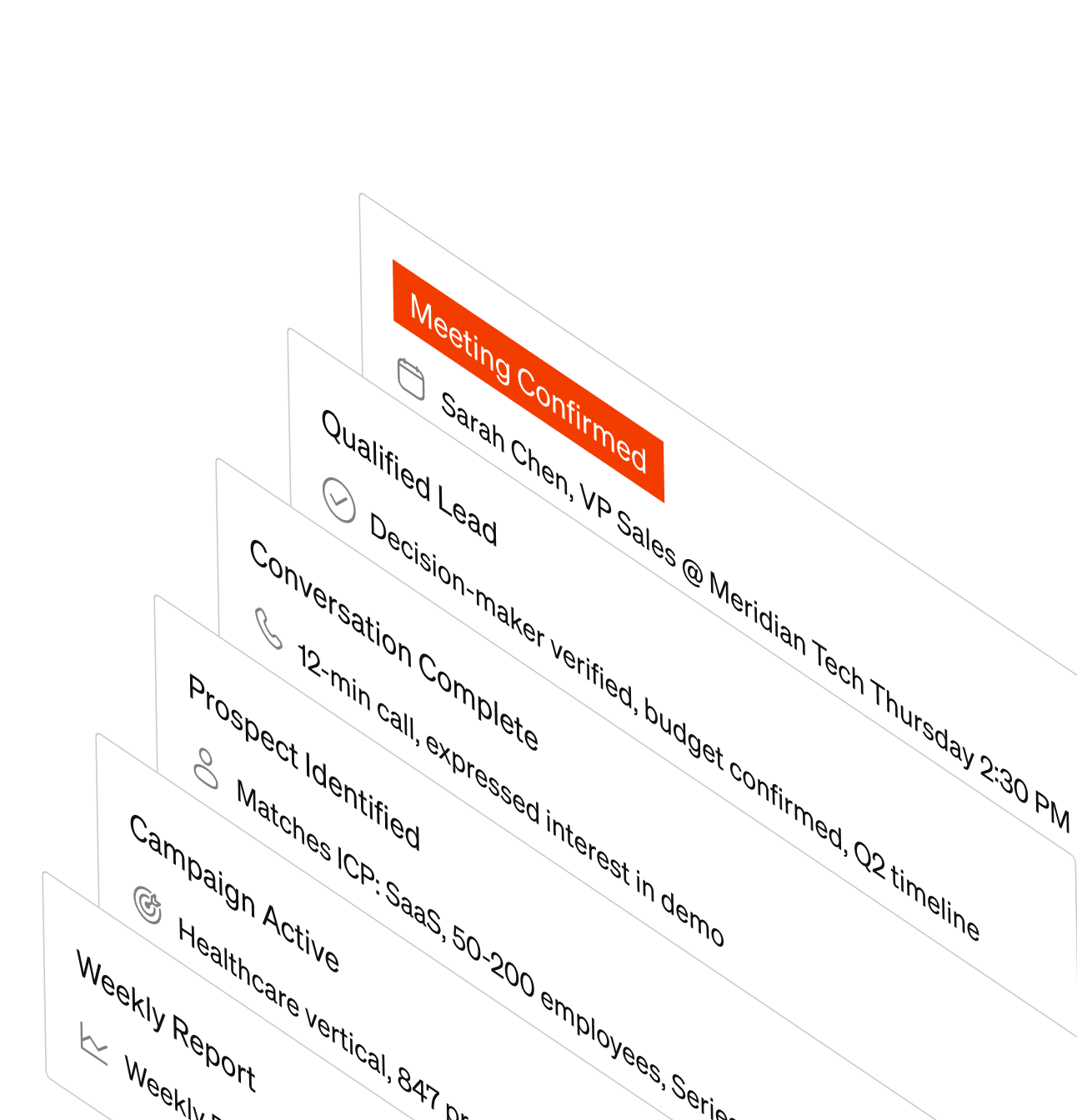
Detailed Lead Notifications
Your sales team receives the prospect's contact details, qualification responses and conversation notes, so they can prepare for the meeting.
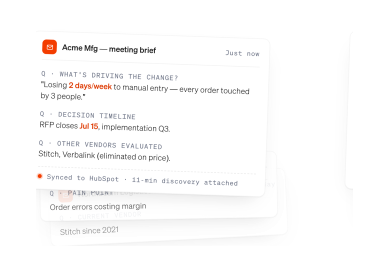
Dedicated US-Based SDR Team
US-based, native English-speaking SDRs learn your offer and target market, then handle prospecting and follow-up on your behalf.
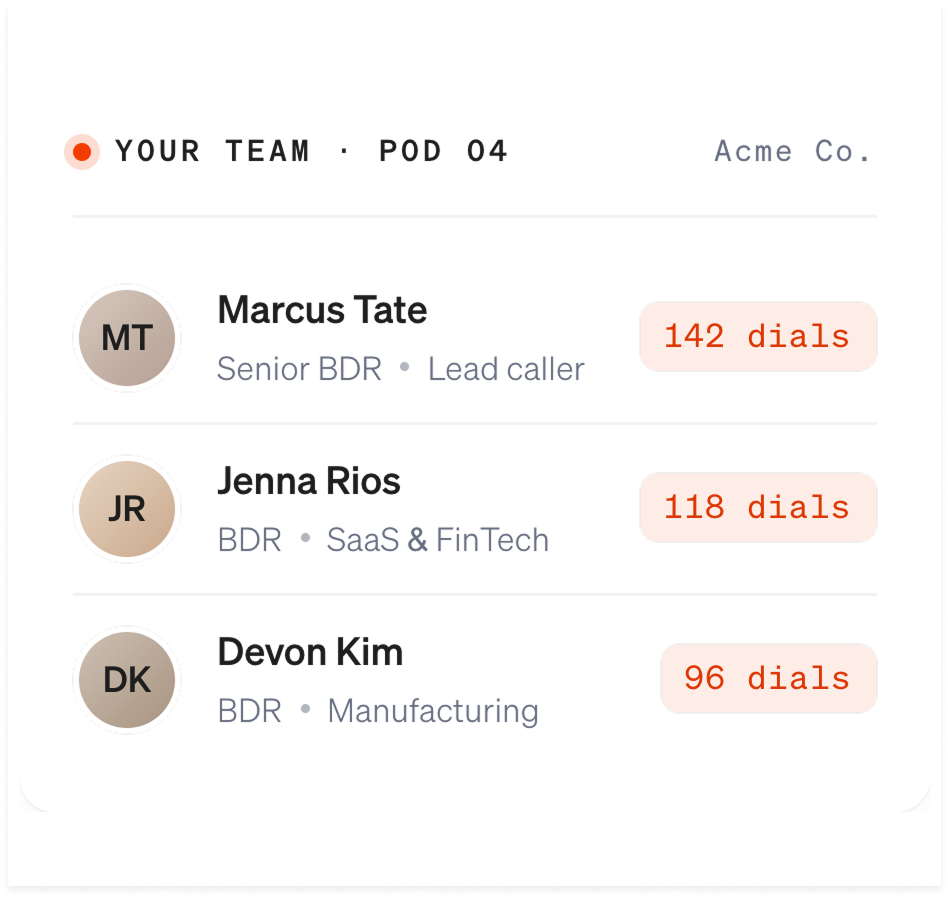
Appointment Scheduling
We coordinate appointments with your sales team’s availability and share the meeting details. We agree on the booking process during setup.
.png)
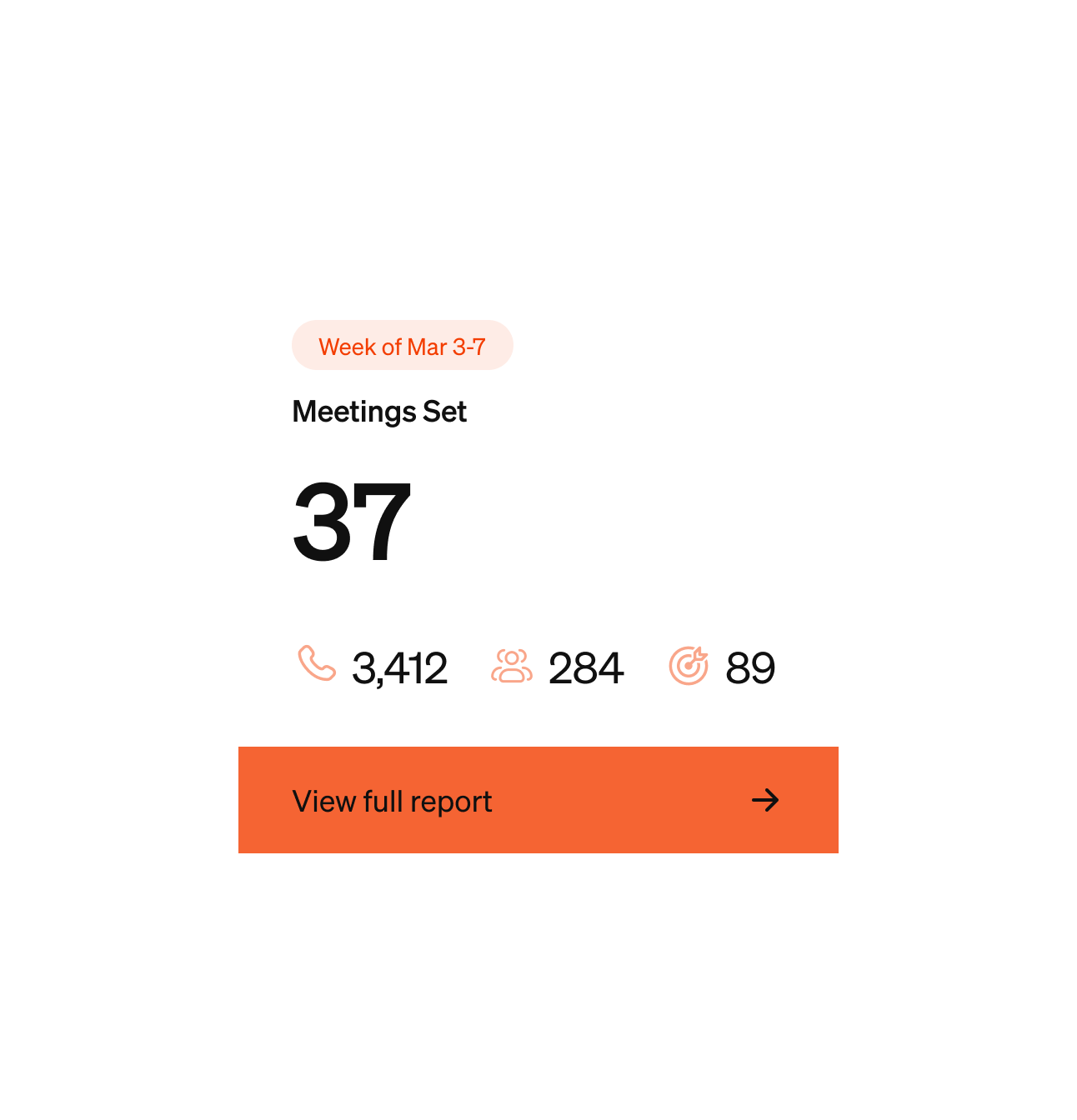
Weekly Reviews & Reporting
Review outreach activity, conversation outcomes and booked appointments with our team. We use those reviews to decide what needs attention next.
Campaign Refinement
We review targeting, call flows and follow-up using campaign results and feedback from your sales team. Changes are guided by what prospects and your team are telling us.
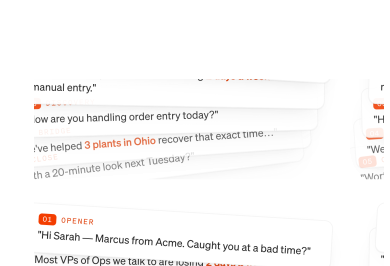
Appointment setting vs. lead generation: what's the difference?
Lead generation identifies or attracts potential buyers through prospect research, marketing and other channels. A new lead may still need outreach and qualification before a sales meeting makes sense.
Appointment setting adds outreach, qualification and scheduling. We contact prospects, assess fit using your criteria and arrange meetings for your sales team.
If your team can handle qualification and follow-up, lead generation may be enough. If that work is keeping your salespeople from meetings, an appointment setting program can take it on.
Our Process
How does our appointment setting process work?
We agree on the qualification criteria, reach the right prospects and prepare your team for each booked meeting.
1

Define a qualified meeting
We learn your offer and ideal customer profile, then agree on who to contact and what your sales team needs to know before a meeting.
Define target companies and buyer roles
Agree on qualification questions
Confirm booking and handoff requirements
2

Reach and qualify prospects
Our US-based SDRs make the calls, ask your qualification questions and follow up with prospects. Weekly reviews help refine the campaign.
Prospect outreach and follow-up
Qualification against your criteria
Weekly reviews of activity and outcomes
3

Book and prepare the handoff
We arrange the meeting and send your team the prospect details and conversation notes. Your salespeople can pick up where the outreach left off.
Coordinate the meeting details
Share qualification responses and notes
Review meeting feedback with your team
Of the appointments in our internal dial study, 23% were booked on the first call attempt, 32.1% on the second and 20.2% on the third. We plan follow-up into the campaign and review the results with you.
Discuss Your Campaign
Why Leads at Scale
Your US-based SDRs work from a playbook shaped around your offer, buyer roles and qualification criteria.
Calls, follow-up and booking are part of one program. Appointment notifications give your salespeople the prospect's answers and context before the meeting.
We review activity and appointment outcomes with you, then adjust targeting, messaging and follow-up.
Learn About Outbound Sales
RESULTS
B2B appointment setting success stories
Actual call counts and booked meetings from client campaigns.

Outbound Calls:
10,200
Appointments:
425
“They have exceeded our expectations in every project.”
Felix Littschwager
Sr. Manager, Inside Sales

Outbound Calls:
20,643
Appointments:
516
“The combined effort has and continues to pay dividends as our sales results continue to double in size year over year.”
Fred Dohmann
CEO

Outbound Calls:
31,425
Appointments:
220
“We have not only been very happy with their service & support but have realized increased sales and additional revenue as a direct result of our relationship.”
Charlie Niemi
Owner, JanPro Northwest
Explore the call counts and appointment outcomes in each case study.
Discuss Your Campaign
Is This Right for You?
Our B2B appointment setting services work
best for companies who:
Sell B2B with deal economics that support outbound prospecting
Have a sales cycle that involves multiple conversations
Need to reach more of their total addressable market
Value qualified appointments over raw activity
Want an outreach team that works with your sales process
Industries we serve:
Manufacturing
Technology & SaaS
Financial Services
Professional Services
Healthcare
Not sure? A quick conversation will tell us both. No pressure—just clarity.
Check Your Fit
FAQ
Frequently asked questions about B2B appointment setting
How many appointments can I expect each month?
Appointment volume depends on your target market, offer, qualification criteria and call volume. We agree on campaign goals before launch and review results with you as outreach progresses. There is no fixed monthly appointment count that applies to every business.
What makes Leads at Scale different from other appointment-setting companies?
Our US-based team handles prospect outreach, qualification, follow-up and meeting booking. You define what a qualified appointment means for your business, and your sales team receives prospect details and conversation notes before each meeting.
See client resultsHow do you qualify prospects?
We agree on your target companies, buyer roles and qualification questions before outreach begins. Those questions can cover needs, decision-making authority, budget and timing. Our callers record the answers so your sales team can assess the opportunity and prepare for the meeting.
Who makes the calls?
Our US-based, native English-speaking Sales Development Specialists make the calls. They learn your offer, target market and qualification criteria before representing your business to prospects.
How quickly can we get started?
Launch timing depends on list readiness, call-flow approval and team setup. We confirm the schedule with you before calling begins. The timing of the first appointments then depends on prospect response and your qualification criteria.
What information do I get about each appointment?
Your appointment notification includes prospect contact details, call history and notes, answers to your qualification questions, and the expected meeting attendees. These details help your sales team continue the conversation without starting over.
How do you measure appointment-setting results?
We review call activity, conversations and booked appointments. Your sales team's feedback helps connect those results to meetings held, accepted opportunities and revenue. Agree on the reporting period and how each stage is counted. Our KPI guide includes definitions and a weekly scorecard.
Read the appointment-setting KPI guideCan you integrate with our CRM?
We review your CRM and calendar setup during onboarding. Before launch, we confirm how booked meetings, qualification answers and call notes will reach your team, including any integration requirements.
What if we need to scale up or down?
Tell us when your pipeline needs or sales capacity change. We will review the call volume and campaign scope with you. Any changes, timing and notice requirements are confirmed under your program agreement.
What does B2B appointment setting cost?
Pricing depends on your target market, outreach volume and campaign scope. We confirm the scope and quote in a written proposal before you commit. Our pricing page explains what drives the cost and what's included.
View appointment-setting pricingExplore Our Other Services

B2B Cold Calling Services
Our US-based team reaches decision-makers, qualifies interest and follows up with prospects on your behalf.
Explore cold calling

Outbound Call Center Services
Plan outbound programs for sales, customer surveys, event invitations, data verification and other calling needs.
Explore call center services
Outbound Sales Services
Compare the outbound support available to your team, from prospecting and qualification to booked sales meetings.
Explore outbound sales

John Dubay
Managing Partner, Leads at Scale
Let's Talk About Your Pipeline
Choose a time to talk through your target customers, appointment goals and sales process. We’ll discuss whether the program is a good fit for your team.
Or call directly: 443-299-6029
Discuss Your Campaign
