


Outbound Call Center Services for B2B

Outbound Call Center Services for B2B

Outbound call center services are essential for B2B companies aiming to generate leads, schedule appointments, and manage sales pipelines. Unlike inbound services, outbound teams actively reach out to potential clients, focusing on decision-makers and executives. These services streamline sales processes by qualifying leads, nurturing relationships, and securing meetings, allowing sales teams to focus on closing deals.

Key takeaways:

  • Lead Generation: Focused outreach to identify and qualify prospects using criteria like budget, authority, need, and timeline (BANT).
  • Appointment Setting: Skilled representatives connect with decision-makers and secure meetings.
  • Pipeline Management: Ensures consistent follow-ups and ongoing communication to keep prospects engaged.
  • US-Based Teams: Local representatives improve communication, build trust, and ensure compliance with regulations.
  • Cost Savings: Outsourcing eliminates the need for in-house teams, reducing overhead costs while offering scalability.
  • Tools & Metrics: CRMs, predictive dialers, and call analytics enhance efficiency, while metrics like conversion rates and pipeline velocity track performance.

Outbound call centers are a practical way for B2B companies to maintain a steady flow of qualified leads, improve sales productivity, and achieve predictable growth.

Main Functions of B2B Outbound Call Centers

Lead Generation and Appointment Setting

B2B outbound call centers specialize in finding and qualifying prospects that align with your ideal customer profile. Their approach goes beyond basic cold calling – representatives conduct thorough research on target companies, analyze their needs, and identify the right decision-makers to contact. This strategic outreach focuses on factors like company size, industry trends, recent developments, and specific challenges the prospects might face.

Qualification is key to streamlining the process. Using BANT criteria – budget, authority, need, and timeline – representatives evaluate whether a prospect has the financial resources, decision-making power, and a genuine need for your solution, as well as a realistic timeline for implementation. This ensures that only high-quality leads make it into your pipeline.

Appointment setting is another critical function handled by these teams. Representatives tackle objections from gatekeepers and secure meetings with key decision-makers like C-level executives or department heads. This requires persistence, professionalism, and the ability to quickly convey value in a way that resonates.

The process often involves multiple interactions. For example, representatives might start with an introductory call, follow up with relevant case studies or insights, and then schedule a discovery call or presentation. They meticulously document each interaction so your sales team has all the context they need when it’s time to engage.

To maximize engagement, representatives also use multi-channel outreach – combining phone calls, emails, and other platforms to build familiarity with your brand before the sales conversation even starts. This integrated approach helps establish trust and increases response rates, feeding directly into effective sales pipeline management.

Sales Pipeline Management

Once leads are generated, outbound teams work to ensure they move smoothly through your sales process. By maintaining consistent communication with prospects at every stage, they prevent deals from losing momentum and keep your company top-of-mind, even during the long decision cycles typical of B2B sales.

Follow-ups are handled with precision. Representatives manage schedules to ensure timely follow-ups, addressing objections and keeping prospects engaged. Whether it’s touching base after a proposal, following up on a board meeting, or reconnecting when budget cycles renew, they ensure opportunities don’t slip through the cracks.

The nurturing process is equally important for leads that aren’t ready to commit right away. Outbound teams provide ongoing value by sharing industry insights, inviting prospects to webinars, or updating them on product improvements. This positions your company as a helpful partner rather than just another vendor, fostering trust over time.

In addition, representatives gather valuable intelligence during their conversations – insights about the prospect’s company, competitors, and market trends. This information not only sharpens your sales strategy but also helps uncover new opportunities within target accounts. These efforts ensure a steady progression toward closing deals and contribute to better overall sales performance.

US-Based Sales Representatives for Better Results

Having US-based representatives can significantly enhance your outbound efforts. They align with local business practices, operate during optimal hours, and connect more effectively with American decision-makers. This familiarity helps them build rapport faster and reduces the challenges often associated with offshore teams.

Clear communication builds trust. US-based representatives are fluent in regional dialects, business idioms, and cultural nuances, allowing them to engage in natural, credible conversations. They can discuss local market conditions, industry events, and specific challenges that resonate with American companies, making interactions more meaningful.

Regulatory expertise is another advantage. US-based teams are well-versed in compliance requirements like CAN-SPAM regulations, state-specific calling laws, and industry-specific guidelines. This ensures that outreach efforts remain professional and legally compliant, protecting your company from potential risks.

Domestic teams also offer more consistent quality control. With easier access to direct oversight, regular training, and performance monitoring, US-based representatives can better adhere to your brand’s messaging and standards. This consistency not only enhances service quality but also reflects positively on your company’s reputation, ultimately improving lead quality and conversion rates.

Benefits of Outbound Call Centers for B2B Growth

Better Lead Quality and Sales Productivity

Outbound call centers play a critical role in refining your sales funnel by thoroughly qualifying leads. This ensures that your sales team engages directly with decision-makers who have genuine buying intent. By handling the initial screening process, call center agents filter out unqualified prospects, allowing your account executives to focus on what they do best: presenting tailored solutions and closing deals.

This streamlined process not only saves time but also enhances productivity. Instead of revisiting basic pain points or determining if a prospect has the authority to make decisions, your sales team can dive straight into meaningful conversations. Additionally, call center agents gather valuable insights during their qualification calls – details like key challenges, budget constraints, decision-making hierarchies, and timeline expectations. Armed with this information, your sales professionals can craft more impactful and customized presentations.

Ultimately, efficient lead qualification doesn’t just boost productivity; it also supports growth strategies that can adapt to changing business needs.

Scalability and Cost Savings

Outsourcing your outbound call center services offers a fast and flexible way to scale your operations. Whether you’re rolling out a new product or entering a new market, outsourced teams can quickly adjust to meet your business demands without the delays of building an internal team from scratch.

This approach also brings considerable cost savings. By outsourcing, you avoid the expenses tied to maintaining an in-house team, such as salaries, benefits, office space, equipment, and management overhead. Plus, outsourced providers often come equipped with advanced tools and technologies, eliminating the need for heavy upfront investments and ongoing maintenance costs.

The flexibility of outsourced services allows you to scale your team up or down based on seasonal fluctuations or market conditions, ensuring your operations remain agile and cost-effective.

In-House vs. Outsourced Call Centers

When deciding between in-house and outsourced call centers, it’s important to weigh the pros and cons based on your business needs. In-house teams provide direct oversight and control, but they require significant time and resources for setup, training, and ongoing management. On the other hand, outsourcing gives you access to experienced professionals and established systems, often delivering strong results with less internal effort.

Outsourced call centers also come with built-in compliance and quality assurance systems, which are crucial for maintaining consistency and effectiveness in outreach efforts. In contrast, in-house teams would need to develop these systems from the ground up, requiring additional investment and time. With outsourced teams, you can integrate proven best practices into your B2B sales process while keeping costs in check and leveraging expertise tailored to your objectives.

Tools, Metrics, and Strategies for Success

Tools for Outbound Call Centers

To run a successful outbound call center, having the right tools in place is non-negotiable. A solid tech stack, anchored by integrated CRMs, streamlines operations and boosts efficiency. CRMs like Salesforce, HubSpot, and Pipedrive are game-changers, giving agents quick access to prospect histories, preferences, and past interactions – all in one place.

Automated predictive dialers are another must-have. These tools eliminate wasted time on busy signals or voicemails by connecting agents only when a live person picks up. This means agents can spend their time doing what they do best – having meaningful conversations.

Call analytics platforms also play a critical role. They provide real-time data on call performance, agent productivity, and even conversation cues. Some advanced features can even pick up on emotional tones in a prospect’s voice, helping agents adjust their approach on the fly.

Lead intelligence tools take preparation to the next level. By providing insights like recent company news or details about decision-makers, these tools allow agents to tailor their outreach. This kind of personalization not only improves engagement but also sets the stage for accurate performance tracking and ongoing improvement.

Performance Metrics to Track

Tracking the right metrics is essential for keeping an outbound call center on track. Key metrics to monitor include conversion rates, appointment-to-sale ratios, pipeline velocity, contact rates, and average handle time.

  • Appointment-to-sale ratios reveal how effectively appointments turn into closed deals, offering insight into lead quality and the sales team’s performance.
  • Pipeline velocity measures how quickly prospects move through the sales funnel, helping you identify bottlenecks and improve collaboration between agents and sales reps.
  • Contact rates shed light on the quality of your call lists and dialing strategies, while average handle time ensures agents strike the right balance between efficiency and meaningful conversations.

By keeping an eye on these numbers, call centers can pinpoint areas for improvement and refine their strategies to boost results.

Strategies for Better Results

The most successful outbound call centers don’t rely on a one-size-fits-all approach. Instead, they use a mix of strategies to improve engagement and outcomes.

  • Multi-touch nurturing is a key tactic, combining calls, emails, and personalized content to keep prospects engaged throughout longer B2B sales cycles.
  • Personalized outreach goes beyond just addressing someone by name. Agents should research a prospect’s company, industry challenges, and recent developments. This preparation allows them to ask thoughtful questions and offer solutions that resonate.
  • Call reviews are invaluable. Analyzing recordings and outcomes helps identify what’s working and where there’s room to improve, whether it’s refining scripts or handling objections more effectively.
  • Time-zone optimization ensures calls are made during a prospect’s local business hours, increasing the chances of reaching them at the right time.
  • Industry-specific messaging tailors scripts and pitches to the unique needs of different sectors. This builds credibility and shows prospects that agents truly understand their challenges.
  • Finally, objection-handling frameworks equip agents with tools to turn concerns into opportunities. Instead of seeing objections as roadblocks, skilled agents use them to uncover needs and guide the conversation toward a solution.

How Leads at Scale Delivers B2B Outbound Call Center Solutions

Leads at Scale

Features of Leads at Scale

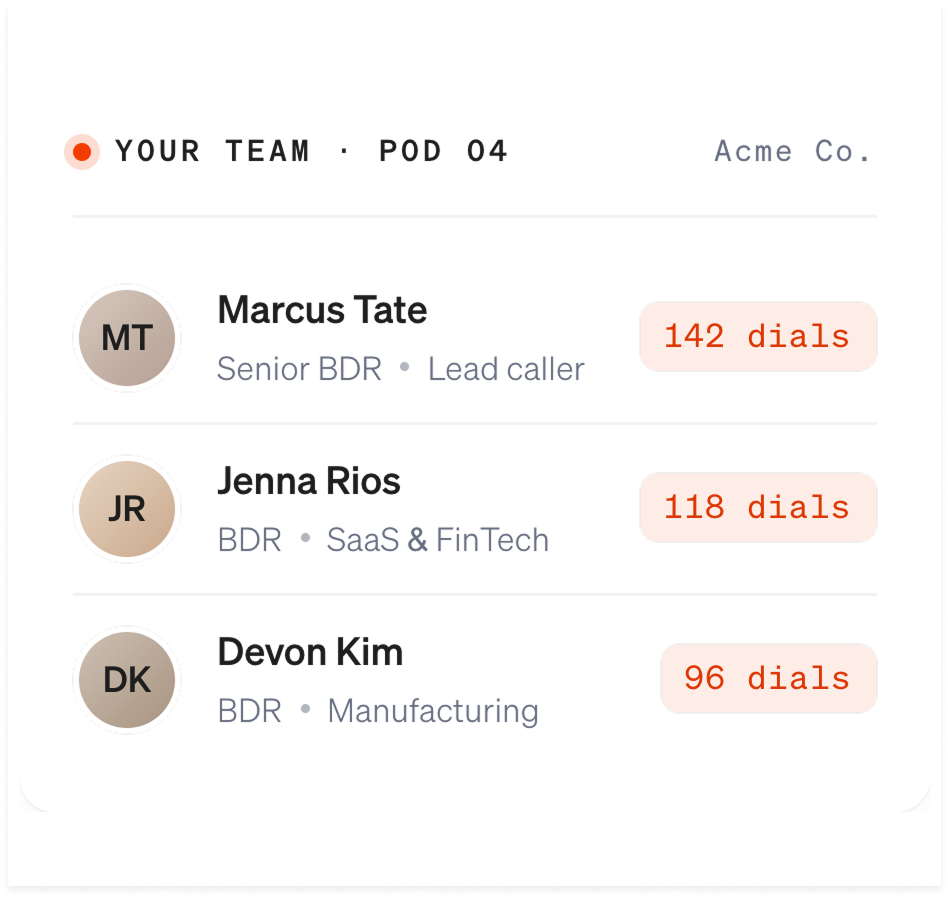
Leads at Scale stands out by using US-based Business Development Representatives who are well-versed in American business practices. This ensures the delivery of clear and effective B2B outreach tailored to the market.

The platform goes beyond basic demographic filtering when building targeted prospect lists. Their team conducts detailed research to identify decision-makers within target companies, ensuring outreach efforts focus on the right contacts. This approach increases contact rates and reduces wasted time on unqualified leads.

Another standout feature is their coordinated multi-channel strategy. By combining calls, emails, and personalized content, Leads at Scale ensures consistent engagement throughout the often lengthy B2B sales cycles, which typically require multiple touchpoints to nurture prospects effectively.

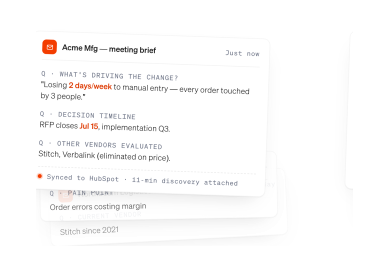
For every qualified appointment, the service provides detailed prospect profiles, giving sales teams a head start in their conversations. These well-thought-out strategies are paired with flexible, performance-driven pricing models, making the service adaptable to a variety of business needs.

Custom Pricing and Scalability

Leads at Scale offers a custom pricing model designed to fit each client’s unique requirements. Instead of using fixed pricing tiers, they collaborate with businesses to create packages that align with both their budgets and growth plans.

Clients begin with a baseline of 1,000+ targeted calls per month, with the flexibility to adjust call volumes based on performance. This approach allows for efficient scaling while keeping costs under control.

Customization also extends to campaign design. Some businesses may focus on entering new markets, while others might prioritize nurturing existing leads. Leads at Scale adjusts calling frequency, messaging, and follow-up sequences to suit these specific goals. This adaptability helps businesses navigate seasonal shifts and changing market conditions, making the service an integral part of their broader sales strategy.

Integration with B2B Sales Goals

Leads at Scale doesn’t operate as a standalone lead generation service. Instead, it integrates seamlessly with existing sales operations, acting as a natural extension of the client’s sales team.

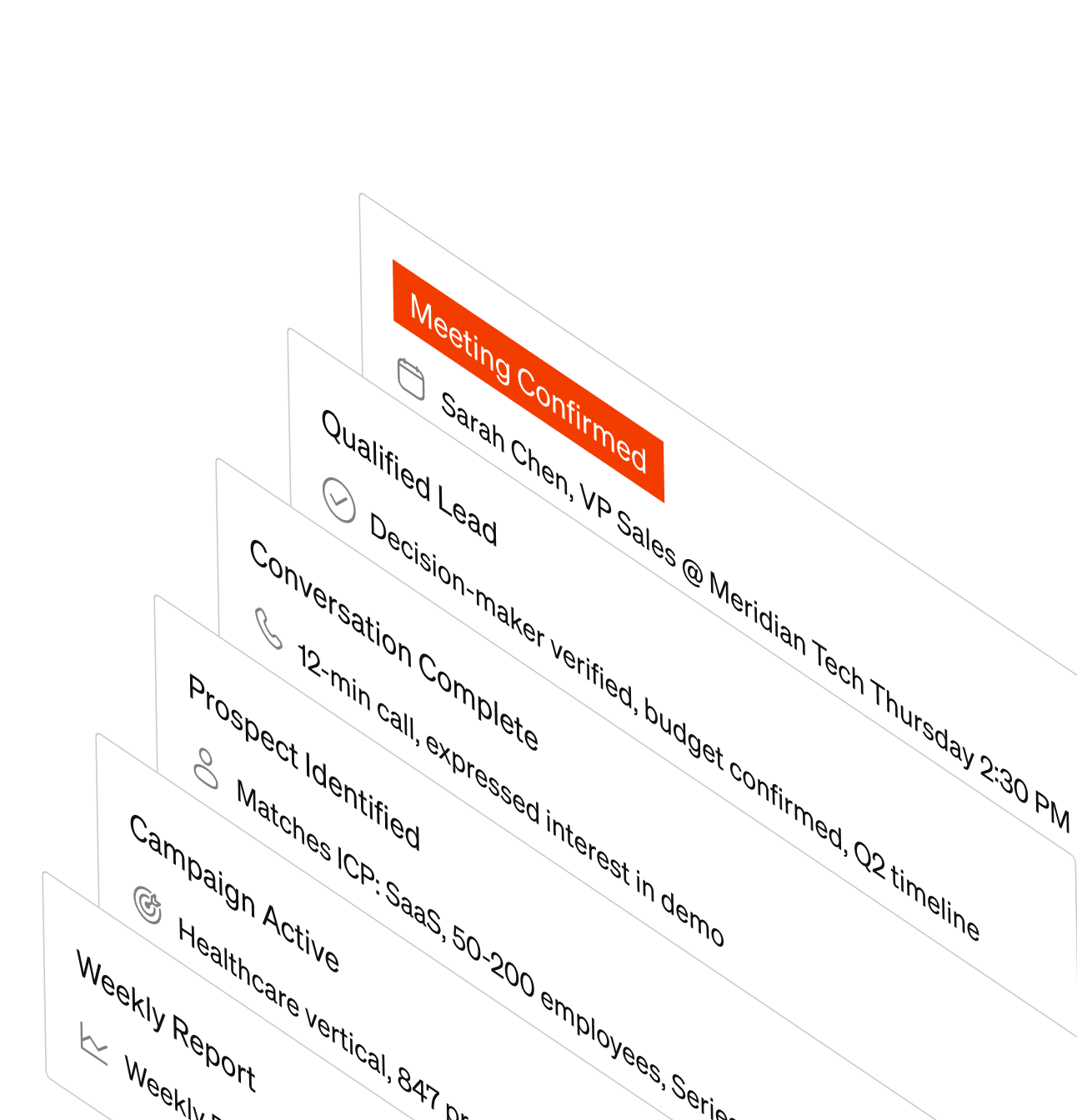
Qualified, warm appointments are scheduled directly into sales calendars, supported by regular pipeline updates. This allows sales teams to focus on closing deals while staying on top of follow-ups.

Additionally, their approach prioritizes connecting with decision-makers – those who have the authority to make purchasing decisions – ensuring outreach efforts are as effective as possible. This alignment with sales goals helps businesses optimize conversions and drive results.

The 17 minute Cold Call Course for B2B Sales

Conclusion: Growing B2B Sales with Outbound Call Centers

Outbound call centers play a vital role in driving B2B sales by actively reaching out to prospects, generating qualified leads, and keeping sales pipelines moving. This proactive approach lays the groundwork for meaningful, human-centered interactions.

In B2B sales, personal connections are everything. Outbound calling helps establish these connections, turning potential leads into real opportunities. The result? Shorter sales cycles and higher conversion rates.

Outsourcing these services also offers a smart way to cut costs. It eliminates the overhead of maintaining in-house teams while giving you access to scalable expertise tailored to your specific needs.

But it’s not just about cost savings – seamless integration is crucial. Today’s outbound call centers work hand-in-hand with your sales team, providing detailed prospect data so your team can focus on what they do best: closing deals.

For B2B companies, outbound call centers are a reliable way to ensure a steady stream of leads and consistent revenue growth. With targeted outreach, professional representation, and clear results, these services are an essential tool for scaling sales operations effectively. By combining strategic outreach with smooth integration, outbound call centers give B2B companies the ability to grow predictably and succeed with confidence.

FAQs

How can outbound call center services improve lead quality and boost sales efficiency for B2B companies?

Outbound call center services play a key role in boosting lead quality by prioritizing targeted outreach and personalized communication. By connecting directly with potential customers, these services can pinpoint decision-makers and gain a deeper understanding of their specific needs. This approach ensures that leads are more relevant and have a higher likelihood of converting into actual sales.

On top of that, outbound call centers help improve sales efficiency by simplifying the sales process. They take on tasks like qualifying leads, scheduling appointments, and managing follow-ups. This allows sales teams to concentrate their efforts on closing deals, saving valuable time and speeding up the sales pipeline. For B2B companies, this means faster results and measurable growth.

What are the benefits of using US-based sales representatives in outbound call centers?

US-based sales representatives bring distinct advantages to outbound call centers. Their deep understanding of regional market trends, local customs, and customer preferences plays a big role in building trust and creating meaningful connections with clients. Plus, their clear communication – free from language or accent hurdles – makes conversations flow more smoothly and effectively.

Another big benefit? They often operate in the same or nearby time zones as their target audience. This alignment with business hours allows for real-time responses and stronger customer engagement. Together, these factors help boost the effectiveness and success of B2B outreach efforts.

How can outsourcing outbound call center services help B2B businesses save money and scale effectively?

Outsourcing outbound call center services can be a smart way for B2B businesses to cut costs. By opting for an external team, companies can sidestep the expenses tied to hiring, training, and managing an in-house staff. Plus, professional call centers are built for efficiency, delivering excellent service at a more affordable price.

Another big advantage is the ability to scale operations effortlessly. As your business grows, outsourced call centers can quickly adapt to handle increased demand or support expansion into new markets. This flexibility means you won’t have to deal with the challenges of hiring and managing additional staff, allowing your business to grow smoothly while keeping client communication top-notch.

Related Blog Posts

John Dubay

John Dubay is the Managing Partner at Leads at Scale, an outsourced sales support company that helps B2B companies generate well-qualified leads at scale, ready to be closed.

Share This

Copy Link to Clipboard

Copy