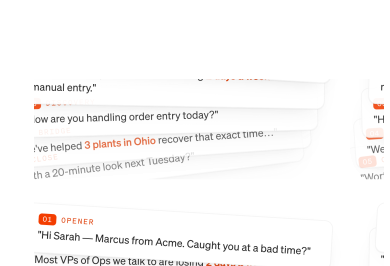


10 Appointment Scheduling Tips for B2B Sales

Effective appointment scheduling can increase lead-to-opportunity conversions by 40% and save sales reps up to 8 hours per week. Poor scheduling, however, can lead to missed meetings, extended sales cycles, and lost prospects. This guide provides 10 actionable tips to help you streamline your scheduling process, improve meeting success rates, and boost sales performance.

Key Takeaways:

  • Research prospects: Tailored outreach increases meeting acceptance rates by 72%.
  • Use the right channels: LinkedIn works for tech buyers, while phone calls excel in manufacturing.
  • Leverage multi-channel outreach: Combining email, calls, and LinkedIn boosts response rates by 3x.
  • Highlight clear benefits: Focus on measurable outcomes like "reduce supply chain delays by 40%."
  • Time outreach strategically: Contact prospects during their industry’s peak response hours.
  • Automate scheduling: Tools like Calendly cut booking time by 40% and reduce no-shows.
  • Define lead requirements: Focus on qualified leads to improve meeting quality by 42%.
  • Build connections: Active listening and personalization increase conversions by 42%.
  • Use flexible scripts: Modular scripts improve booking rates by 27%.
  • Consider professional services: Appointment-setting providers achieve 65%+ show rates.

By following these tips, you can reduce no-shows, shorten scheduling cycles, and focus on closing deals.

Advanced Phone Skills to Set Every Appointment

1. Research Your Prospects First

Digging into your prospects before reaching out can make a huge difference in B2B appointment scheduling. In fact, data shows it can increase meeting acceptance rates by up to 72% [1][4]. This initial research helps you tailor your approach and choose the right communication channels – setting the stage for success.

Here’s what to focus on during your research:

  • Company Insights: Look into their current technology stack, recent funding rounds, and any plans for expansion. These details can reveal real opportunities [3][4].
  • Decision-Making Structure: Understand their organizational hierarchy. This helps you target both the budget holders and key influencers effectively [8].
  • Industry Landscape: Stay aware of market trends and competitor relationships that might influence their buying decisions [6].

"Continuously update prospect profiles – market conditions shift monthly." [1][3]

Tools to streamline your research: Many top-performing teams rely on tools like LinkedIn Sales Navigator for mapping organizations, ZoomInfo or Lusha for verifying contact details, and industry news aggregators to track buying signals.

Real-world example: One SaaS team that prioritized aligning with tech stacks and monitoring funding alerts saw a 32% increase in appointments and 28% fewer no-shows [1][3].

Common pitfalls to avoid:

  • Ignoring key buying signals by focusing only on company size [3].
  • Reaching out without verifying decision-maker contact details [8].
  • Missing potential conflicts by overlooking existing competitor partnerships [6].

2. Choose the Right Contact Method

Once you’ve done your prospect research, the next step is deciding how to reach out. Different roles and industries lean toward specific communication methods, so tailoring your approach is key.

For instance, tech buyers engage more on LinkedIn (80%), while manufacturing professionals prefer phone calls (65%) [3]. If you’re pitching complex enterprise solutions, phone calls can yield a 40% higher response rate [3]. On the other hand, technical buyers often favor emails because they like having written documentation [10].

How to pick the best channel:

  • For C-level executives in tech, LinkedIn is a strong choice. It delivers 28% higher open rates than traditional methods [1]. To boost your chances, engage with their posts before sending a connection request.
  • Consider this:

    "Over-emailing tech buyers is a common mistake – our data shows 58% actually prefer receiving demo videos first" [3]

Timing is everything:

  • Phone calls are most effective between 10-11 AM or 2-4 PM local time, increasing answer rates by 50% [3].
  • Emails sent on Tuesday or Thursday mornings see 35% higher open rates [10].

When to switch things up:

If your outreach isn’t working, it might be time to pivot. For example, switch channels if:

  • Phone calls have less than a 15% success rate,
  • Emails have under a 20% open rate, or
  • LinkedIn responses drop below 10% [1][3][4].

Tools like Outreach.io can help by automatically adjusting timing and channels based on how prospects engage [11].

Once you’ve nailed your channel strategy, it’s time to explore how combining multiple touchpoints can amplify your results.

3. Use Multiple Contact Points

Expanding on the importance of choosing the right channels, using multiple contact points can greatly improve your chances of booking appointments. Studies reveal that coordinated outreach across several channels can lead to 3x higher response rates and cut scheduling time by 22% [3] [4].

How to create effective sequences:

A well-planned sequence might include email, LinkedIn, phone, and SMS, spread out over 7-10 days with a 48-hour gap between each touchpoint [3] [4]. For example, an "email → social → call" sequence has been shown to boost engagement by 42% compared to making cold calls alone [3]. Timing is key – too frequent contact can overwhelm prospects [4].

"Multi-channel outreach isn’t about spamming prospects everywhere – it’s strategic reinforcement through their preferred channels."

Tailoring your messaging:

Each interaction should build on the last, maintaining consistent messaging. Let’s say your initial email addresses specific industry pain points. Your LinkedIn message could then reference mutual connections who’ve tackled similar challenges, while your follow-up phone call might focus on offering actionable solutions [1] [3].

For instance, a manufacturing SaaS company achieved 40 appointments in just 90 days by combining email, LinkedIn, and phone outreach, enhanced with targeted demo clips [3] [6].

Watch out for these common mistakes:

  • Copy-pasting the same message across platforms, which can lower response rates by 73% [1].
  • Overloading prospects with too many messages, which can hurt engagement [4].
  • Misaligned messaging between your sales development reps (SDRs) and closers, leaving prospects confused [10].

This multi-layered strategy naturally leads into Tip 4, which focuses on consistently communicating clear benefits – prospects need to see value at every step.

4. Lead with Clear Benefits

Once you’ve established multiple contact points, the next step to securing appointments is highlighting benefits that directly address your prospects’ challenges. Focusing on measurable results can boost demo bookings by 38% compared to simply listing features [3][4].

Quantify Your Value Proposition

The best benefit statements are tied to specific, measurable outcomes. For instance, if you’re speaking to manufacturing executives, it’s far more effective to say, "reduce supply chain delays by 40%" than to promise vague improvements like "better efficiency" [1][10].

Here’s how you can reframe benefits for different industries:

  • Manufacturing: Instead of "Improve supply chain", say "Cut inventory costs by 32% within 90 days."
  • SaaS: Replace "Better customer retention" with "Reduce churn by 25% in the first quarter."
  • Financial Services: Upgrade "Streamline operations" to "Automate 80% of manual reporting tasks."

Structure Your Benefit Message

Top-performing sales teams often rely on the Problem-Agitation-Solution (PAS) framework to craft their benefit messages [9][3]. For example, CFOs have responded well to messages like this:

"We helped a mid-sized manufacturer cut their budget overruns from 12% to just 2% within the first quarter through our AP automation solution. Would you be interested in seeing how we could achieve similar results for your organization?" [10][4]

Timing and Placement Matter

The timing of your message is crucial. Presenting key benefits within the first 90 seconds of a conversation can increase your chances of scheduling success by 28% [9][2]. Even email subject lines that focus on benefits see 23% higher response rates for Leads at Scale clients [3].

Avoid Common Pitfalls

Leading with features instead of benefits fails 67% more often [1][3]. Another mistake? Overloading your message with technical jargon – it can reduce understanding by 40% [1]. Keep your statements simple, specific, and tied to measurable results.

5. Contact Prospects at the Right Time

Once you’ve created messaging that highlights benefits, the next step is reaching out when prospects are most likely to respond. Studies show that timing plays a major role in boosting response rates and securing meetings. The best times to connect often depend on the industry, job role, and location.

Industry-Specific Timing

Different industries have their own "sweet spots" for outreach. Here’s a quick guide:

Industry Best Contact Time Key Consideration
Financial Services 7:30-8:30 AM Before the markets open
Manufacturing 6:30-8:00 AM Before shift changes
Healthcare 10:00-11:00 AM After morning rounds

Time Zone Management

For global outreach, tools like Doodle can automatically adjust for time zones, helping you avoid missed meetings [2][9].

"We discovered that 62% of ignored outreach occurs during peak workload hours. Simply adjusting contact timing improved response rates by 28% across all industries." [10]

Using Data to Fine-Tune Timing

Top-performing sales teams rely on CRM analytics to perfect their timing. Useful metrics include:

  • Peak activity times on platforms
  • Patterns in meeting attendance [8]

Seasonal Factors to Consider

Certain times of the year can impact outreach success. Keep these in mind:

  • Fiscal calendars: Avoid quarter-end and year-end crunch periods.
  • Industry events: Be aware of major conferences or trade shows.
  • Regional holidays: Take note of local customs and vacation seasons.
  • Business cycles: Timing around budget reviews or planning periods can make a difference [1][10].

Follow-up Timing

For follow-ups, timing is just as important. Use these intervals to stay on top of mind:

  • Between touches: Space follow-ups 3-5 days apart.
  • Pre-meeting reminders: Send reminders 24 hours and 1 hour before the scheduled time [3][9].
sbb-itb-ee13fa1

6. Use Calendar Tools

Once you’ve fine-tuned your contact timing, the next step is to use calendar tools to schedule meetings more effectively. These tools are a game-changer for simplifying B2B appointment setting. By automating scheduling tasks, they cut down on admin work and boost meeting success rates.

Key Features to Look For

When choosing a scheduling tool for B2B purposes, prioritize these features:

Feature Description
Two-way Calendar Sync Keeps availability updated in real time to avoid double-bookings
Time Zone Detection Automatically adjusts meeting times for participants in different zones
Custom Booking Pages Offers a branded experience that adds a touch of professionalism
Lead Qualification Questions Screens leads automatically to ensure better-quality meetings

Why Automation Matters

Using calendar tools streamlines the entire scheduling process. For example, TuCalendi users report completing bookings 40% faster when lead qualification questions are enabled [2]. These tools also reduce back-and-forth emails by 60-80%, giving sales teams more time to focus on closing deals [9].

Seamless Integration

The best scheduling platforms integrate effortlessly with your existing systems.

"Scheduling tools function as always-available coordinators – eliminating human error in availability tracking."

Connect your calendar tool with:

  • CRM systems to automatically track leads
  • Video platforms to generate instant meeting links
  • Marketing tools for follow-up campaigns

Real-World Results

Take CIENCE, for example. By using Calendly Enterprise, they slashed their average booking time from 3.2 days to just 6 hours. Automated reminders also helped them improve their show rates.

Tips for Maximizing Calendar Tools

To get the most out of your scheduling software:

  • Set up standardized booking links with multiple meeting length options.
  • Personalize confirmation messages to encourage higher attendance.

Companies like Doodle report show rates as high as 92% when personalized confirmations are used [9]. This mix of automation and personalization is a winning formula for B2B appointment setting.

Next, we’ll dive into Tip 7 and how to define lead requirements effectively.

7. Set Lead Requirements

Defining clear lead requirements can make a big difference in how effective your appointment scheduling process is. Companies that create detailed ideal customer profiles (ICPs) report a 42% boost in appointment quality [10]. This step works hand-in-hand with the multi-channel outreach mentioned earlier (Tip 3) and ensures your scheduling tools (Tip 6) focus on securing high-value meetings.

Lead requirements are built around key criteria, often organized in a weighted scoring system. These criteria should guide your messaging (Tip 4) and help you decide the best timing for outreach (Tip 5):

Requirement Category Weight Key Indicators
Budget Authority 30% Ability to approve purchases
Decision-maker Access 25% Direct contact with key stakeholders
Pain Point Match 20% Alignment with their specific needs
Company Size 15% Revenue or employee size thresholds
Timeline Urgency 10% Readiness for implementation

Flexible Scoring System

Focus on prospects meeting 90% or more of your criteria, nurture those around 80%, and deprioritize the rest.

Validation Tools

Using validation tools can significantly cut down on wasted time. In fact, companies that leverage these tools reduce unproductive meetings by 38% [5]. Some effective options include:

  • Platforms that track intent data
  • Automated surveys for lead qualification

Case Study: Real-World Application

One enterprise software team, targeting contracts worth $250k or more and requiring a 6-month implementation timeline, saw impressive results. They reduced wasted meetings by 37% and increased deal sizes by 22% [10].

To stay on top of changing trends, conduct monthly reviews of win/loss data, market shifts, and conversion rates. Companies that follow this practice achieve 68% higher lead-to-opportunity conversion rates [10].

8. Build Strong Connections

A whopping 73% of B2B buyers prefer working with sales reps who truly understand their business challenges [1][4]. Building these connections not only aligns with the lead qualification tips from earlier but also helps cut down on those frustrating no-shows.

Here’s a key tactic: active listening. Let your prospects talk for about 70% of the call by asking smart, open-ended questions. Why? It can lead to a 42% boost in conversions [6][8]. After listening, summarize their points clearly with phrases like:

  • "Let me confirm I understand…"
  • "Based on what you’ve shared…"
  • "To ensure we’re aligned…"

Personalization at Scale

Want to personalize without losing efficiency? Use this two-tier approach:

Personalization Level How to Do It
Intermediate Reference recent company updates or news
Advanced Provide tools like ROI calculators tailored to their needs

Handling Objections Professionally

Objections? No problem. Address them with this 3-step process:

  1. Normalize: Acknowledge their concern. For example, “That’s a common question.”
  2. Provide evidence: Share data or examples that tackle their worries.
  3. Suggest next steps: Offer a clear path forward that feels actionable.

This approach works hand-in-hand with multi-channel sequencing (remember Tip 3?) to keep the conversation moving forward.

"The best salespeople don’t sell products – they build partnerships by becoming students of their client’s business." – John Barrows, Top Sales Trainer [4][6]

Follow-Up Strategy

Keep the momentum alive by following up with personalized messages that address the specific pain points or goals discussed earlier. Track your re-engagement rates – aim for more than 65% within 90 days – to see how well these connections are working [3][6].

9. Prepare Flexible Call Scripts

Setting up B2B appointments effectively means balancing structure with a natural flow. Instead of sticking to rigid scripts that can sound robotic, successful sales teams rely on flexible guides. These guides adjust to different prospect types while keeping the core message consistent.

Core Script Components

Build a script with modular elements like these:

Component Purpose Example
Value Opening Grab attention quickly "I noticed your recent EU expansion."
Discovery Questions Engage the prospect "What challenges are you facing with your current CRM implementation?"
Transition Points Manage time effectively "That’s an important point – let’s explore it in depth during our demo."

Tailor the script for specific channels like phone, LinkedIn, or email to fit your multi-touch strategy.

Personalization Framework

Add 2-3 customized touches to each call. For example, reference the prospect’s tech stack or use an industry-specific ROI calculator. When speaking to technical buyers, include a section for technical details. For C-suite executives, focus on business outcomes instead. This approach has been linked to a 27% increase in successful bookings [1][7].

Time Management Techniques

Use time-focused language to keep the conversation on track. For instance: "Can we reserve 25 minutes Thursday to solve this?" This reduces off-topic discussions by 58% [13][14]. Pair this with calendar automation tools (as discussed in Tip 8) while keeping the human touch intact.

"The best scripts aren’t scripts at all – they’re conversation guides that help reps navigate naturally while hitting key value points consistently." – Top Sales Training Expert [1]

Performance Metrics

Keep an eye on these key metrics: over 25% of conversations converting into appointments and handle times under 4.5 minutes. Match these metrics with your lead qualification criteria from Tip 7. Top teams regularly A/B test different script variations, leading to a 19% improvement in show rates [13]. Importantly, human-guided scripts outperform fully automated ones by 41% [9].

To boost scheduling success, include tools like calendar links with embedded demo videos. These can increase acceptance rates by 33% [12].

10. Work with Appointment Setting Services

Using optimized scripts (see Tip 9) can boost individual conversions, but professional appointment setting services take it further with systems designed to scale. These services help keep the pipeline flowing smoothly, building on the groundwork laid in Tips 1-9. Research shows they achieve 40-60% higher show rates compared to in-house efforts [3].

How They Streamline Operations

Top appointment setting providers offer tools and processes that simplify scheduling and tracking, such as:

  • Real-time calendar syncing, which reduces scheduling conflicts by 78% [2].
  • CRM-integrated lead tracking, ensuring no prospect falls through the cracks.
  • Performance dashboards, delivering show rates between 65-80% [4].

Advanced Technology at Work

These services often use tools that many companies find too costly to manage internally. Examples include:

  • Conversation intelligence platforms for call monitoring and quality control [1].
  • Automated dialers with local presence numbers, improving contact rates [4].

When combined, these tools enhance meeting quality and ensure more meaningful connections with prospects.

The Cost vs. Value Factor

Professional appointment setting services typically show results within 45-60 days [3]. Costs range between $150-$400 per meeting [3], but the returns are clear:

  • Sales teams save 18+ hours per week, allowing them to focus on closing deals.
  • The pipeline grows steadily with pre-qualified prospects.
  • Administrative tasks are minimized, freeing up additional resources.

"Localized expertise combined with Tip 1 prospect research delivers 3x higher conversion than offshore solutions" [3].

Keys to Success

To get the most out of these services, follow these best practices:

  • Share clear lead requirements (see Tip 7).
  • Schedule weekly performance reviews to stay aligned.
  • Provide product training to ensure the team understands your offerings.

Most programs hit their stride by the 90-day mark [3], with reliable providers maintaining show rates above 65% for qualified meetings [4]. This approach ensures your sales team can focus on meaningful conversations while keeping the pipeline strong and consistent.

Conclusion

Scheduling appointments effectively requires a mix of thorough research, strategic outreach, and the right tools. By focusing on targeted research, crafting benefit-driven messaging, and maintaining a consistent follow-up process, sales teams can significantly boost their success rates.

When applied correctly, these strategies result in 35% faster conversions and cut no-show rates by half, thanks to precise targeting and automated reminders [3][9]. Combining in-depth prospect research (Tip 1) with multi-touch outreach strategies (Tip 3) lays the groundwork for steady pipeline growth. Modern scheduling platforms further simplify the process with automation [2][3].

Professional appointment-setting services achieve show rates of over 65% for qualified meetings [4], offering a dependable way to maintain a healthy pipeline. Using multiple contact methods strengthens client relationships, with companies reporting 28% more repeat meetings when employing three or more outreach channels [3][4].

For teams looking to scale quickly, pairing these strategies with professional services (Tip 10) creates a well-rounded approach. Success hinges on integrating prospect research (Tip 1), multi-channel outreach (Tip 3), and qualification techniques (Tip 7) into a unified system. When done right, this approach doubles the number of qualified leads entering the sales pipeline [1][3][4], paving the way for better sales results and long-term growth.

FAQs

How to increase appointment show rates?

Boosting appointment show rates involves combining effective outreach strategies with proper tools and clear communication. Here’s how you can make it happen:

Highlight the Meeting’s Value: Instead of using vague phrases like "Discuss solutions", focus on specific, actionable goals. For example: "Review 3 cost-saving strategies for your AP department." This approach has been shown to improve effectiveness by 58% [3].

Use Multiple Reminder Channels:

  • SMS: With a 95% open rate within 5 minutes, texts are a powerful way to ensure your message is seen [4].
  • LinkedIn Messages: These boast an impressive 82% open rate [1].

Personalize Every Interaction: Tailor your communication to the recipient by addressing their pain points and including relevant case studies. Industry-specific research can make your messaging even more impactful [3].

Leverage Automation Tools: Utilize tools that combine lead verification (as mentioned in Tip 7) with automated reminder sequences. Companies using AI-powered confirmation systems report a 40% increase in show rates compared to manual methods [2].

Track Key Metrics: Keep an eye on these numbers to measure and improve your efforts [10][3]:

  • Email open rates: Aim for over 65%.
  • Response time: Ideally under 2 hours.
  • Last-minute reschedule rates: Monitor closely.
  • Calendar link engagement: Gauge interest and follow up as needed.

Related Blog Posts

John Dubay

John Dubay is the Managing Partner at Leads at Scale, an outsourced sales support company that helps B2B companies generate well-qualified leads at scale, ready to be closed.

Share This

Copy Link to Clipboard

Copy