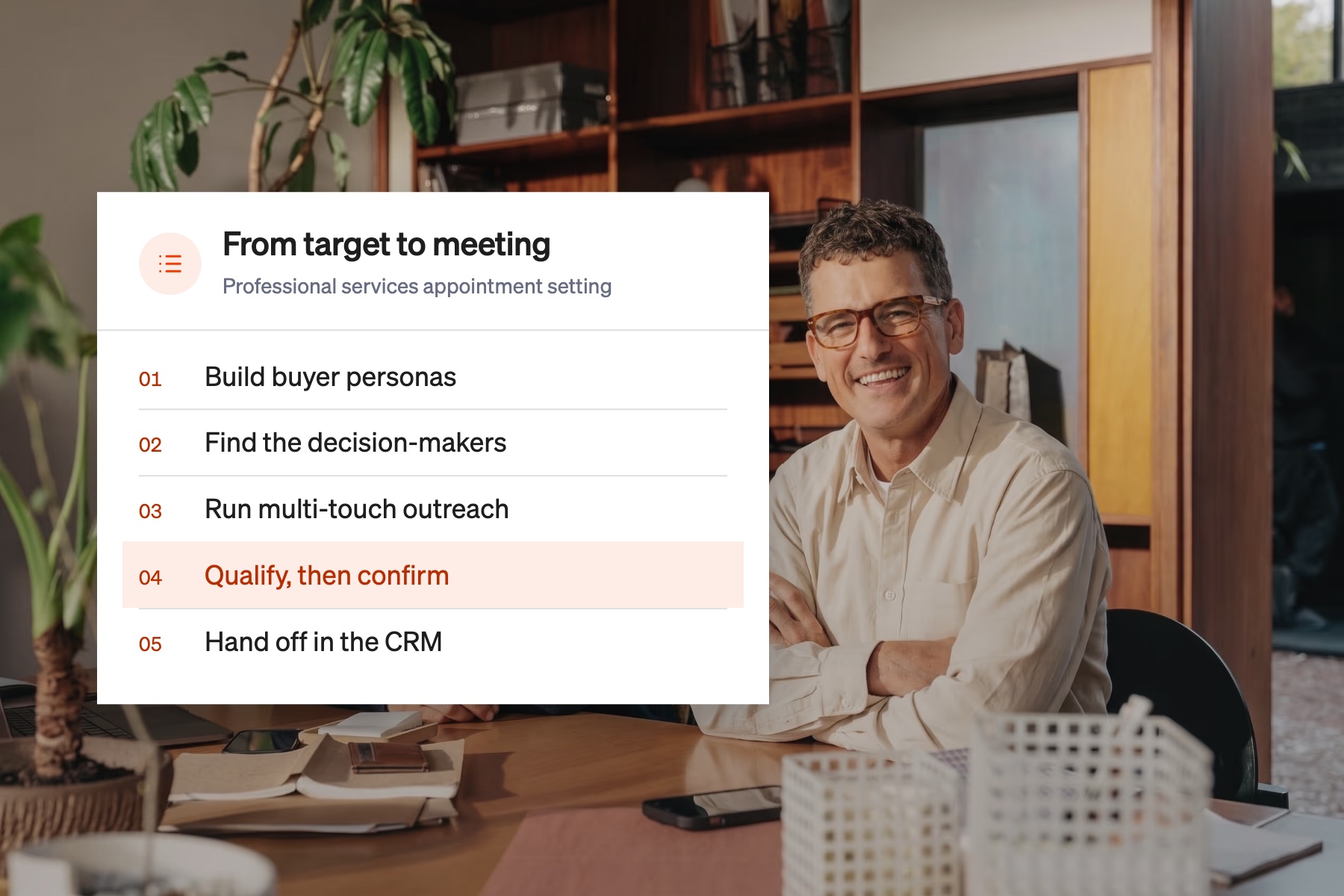
Healthcare lead generation is the work of getting qualified sales conversations with the people who buy medical products and services: hospital administrators, practice managers, procurement leads, and specialty physicians. In B2B healthcare, that work is almost never a marketing-funnel problem. It is an access problem. The buyers are hard to reach, protected by gatekeepers, and scattered across specialties that each need their own list and their own pitch.
We have run these campaigns for health benefits organizations, medical documentation software companies, and medical device manufacturers. The pattern holds across all of them. When a healthcare outbound program works, it works because someone made enough of the right calls, to the right people, with an opener good enough to earn a few more minutes. Most of the meetings get booked in the first three attempts. The rest of this guide is about how to build a program that reaches that point, and what real results look like when it does.
By John Dubay, founder of Leads at Scale.
Why is healthcare lead generation harder than standard B2B?
Three things make selling into healthcare slower than selling into most other industries.
First, the decision-makers are guarded. A cardiologist, an oncology department head, or a director of procurement at a large health system does not answer unknown numbers, and their staff is trained to screen. Our contact rates in healthcare campaigns tell the story plainly. On a campaign for Elevance Health, one of the largest health benefits organizations in the country, we connected on 10.6% of dials. For LAP Laser, calling into radiology and oncology facilities, the rate was 14.1%. For iScribe Health, calling specialty practices, it reached 22%. Those are respectable numbers for healthcare, and they are also a reminder: most dials do not reach a person. Volume is not optional.
Second, the market is fragmented by specialty. A medical device company selling into radiation oncology is not talking to the same buyer as a documentation platform selling to orthopedists and OBGYNs. Each specialty has its own titles, its own priorities, and its own objections. A generic list gets generic results.
Third, the sales cycle is long and the buying committee is large. A single purchase can involve a clinician who wants the product, an administrator who controls the budget, and a compliance or IT reviewer who can veto it. That means the first meeting is rarely the deal. It is the start of a process that can run months. The job of lead generation is to keep starting those processes at a steady rate so the pipeline never runs dry.
None of this is a reason to avoid outbound. It is the reason outbound works so well here. The companies that reach these buyers consistently are the ones that pull ahead, because most of their competitors give up on the phone too early.
What does it actually take to book a meeting with a clinical decision-maker?
Persistence, and it is measurable. Across our outbound campaigns we looked at roughly 36,000 contacts and the point at which each appointment was actually set. The distribution is consistent enough to plan around:
- 23% of appointments are booked on the first connected call
- 32% are booked on the second call
- 20% are booked on the third call
- The remaining 25% take four calls or more
Add the first three and you get about 75% of all meetings booked within three connected conversations. The average appointment takes just under three attempts. That single fact should shape how any healthcare program is staffed and measured. A rep who stops after one voicemail is walking away from three-quarters of the meetings. A program that judges itself on day-one results will kill campaigns that were one call away from producing.
Three things drive whether those calls convert. The list comes first, because a perfect call to the wrong contact produces nothing. The opening line comes second, since the first ten seconds decide whether a busy clinician stays on the line. The rep comes third, because healthcare buyers can tell within a sentence whether the person calling understands their world. Get those three right and the distribution above starts working in your favor.
How do US-based, native-English callers change healthcare outreach?
Buyers in healthcare are cautious by profession, and they judge quickly. A caller who sounds unsure, reads a script word for word, or is hard to understand gets screened out before the value proposition ever lands. This is one reason clients search specifically for US-based callers and native English speakers when they look for outbound help. They are not being fussy. They are protecting the way their brand sounds to a physician or a hospital executive.
Every Leads at Scale campaign is run by US-based, native-English Business Development Representatives. When we called radiology and oncology facilities on behalf of LAP Laser, a global medical laser manufacturer, we used that team specifically because the conversations required credibility with clinical buyers. Their team's own words afterward: our reps showed "exceptional preparation and impressive listening and speaking skills," and "exceeded our expectations in every project." That outcome is not about accent alone. It is about a caller who can hold a real conversation with a specialist, handle a clinical objection, and represent a serious medical brand without a script showing through.
For a medical or medical device company, the caller is the brand for the length of that call. It is worth making sure the brand sounds like it belongs.
What results can a healthcare outbound campaign realistically produce?
Numbers beat adjectives. Here are three healthcare campaigns we ran, with the actual figures.
- Elevance Health (health benefits, 118M members): 8,841 outbound calls at a 10.6% contact rate, 121 appointments set
- iScribe Health (AI medical documentation software): 6,166 outbound calls, 1,355 decision-maker conversations, 342 demo appointments set
- LAP Laser (laser systems for radiation oncology): 13,737 outbound calls, 1,935 decision-maker conversations, 276 appointments set
A few things worth pulling out of those numbers. Elevance Health came to us with an urgent need and hard deadlines, and we set 121 appointments at a 12.9% appointment-set rate against a demanding, high-stakes brand. iScribe Health could not sustain the outbound volume needed to reach orthopedists, cardiologists, and OBGYNs, so we handled all of the prospecting, calling, and qualifying and delivered 342 demo appointments for their sales team to close. LAP Laser needed to reach more than 4,000 healthcare, radiology, and oncology facilities and did not have the internal bandwidth, so our team made the calls their account managers never could and produced 276 qualified appointments.
The through-line: in every case the client had a strong product and a real access problem. The appointments came from calls their own teams did not have the capacity to make.
How does this work for medical device and MedTech companies specifically?
Medical device and MedTech sales carry an extra layer of difficulty, and they reward outbound more than almost any other healthcare segment.
The buyers are specialists. Selling a radiation-oncology device means reaching physicists, radiation oncologists, and the department leads who sign off on capital equipment. Selling a documentation or workflow tool means reaching practice owners and the specialty physicians who will actually use it. These are not people who fill out web forms. They are reached by phone, by name, one qualified conversation at a time.
Our iScribe Health and LAP Laser campaigns are both, at heart, MedTech stories. iScribe builds AI-powered documentation software that integrates with electronic health records; reaching their market meant 6,166 calls into specialty practices and 342 booked demos. LAP builds precision laser systems used in radiation therapy; reaching their market meant 13,737 calls into oncology and radiology facilities and 276 appointments with the decision-makers who buy that equipment. Different products, same method: a clean list of the exact clinical buyers, US-based callers who could speak credibly to them, and enough persistence to get through three calls before quitting.
For a device company weighing whether to build this in-house or bring in a partner, the honest question is capacity. If your account managers are already carrying a full close-side load, the outbound calls are the first thing that slips. That is usually where a dedicated B2B appointment setting team earns its keep.
Should you build healthcare lead generation in-house or outsource it?
Both models can work. The right answer depends on volume, timeline, and what your sales team should be spending its hours on.
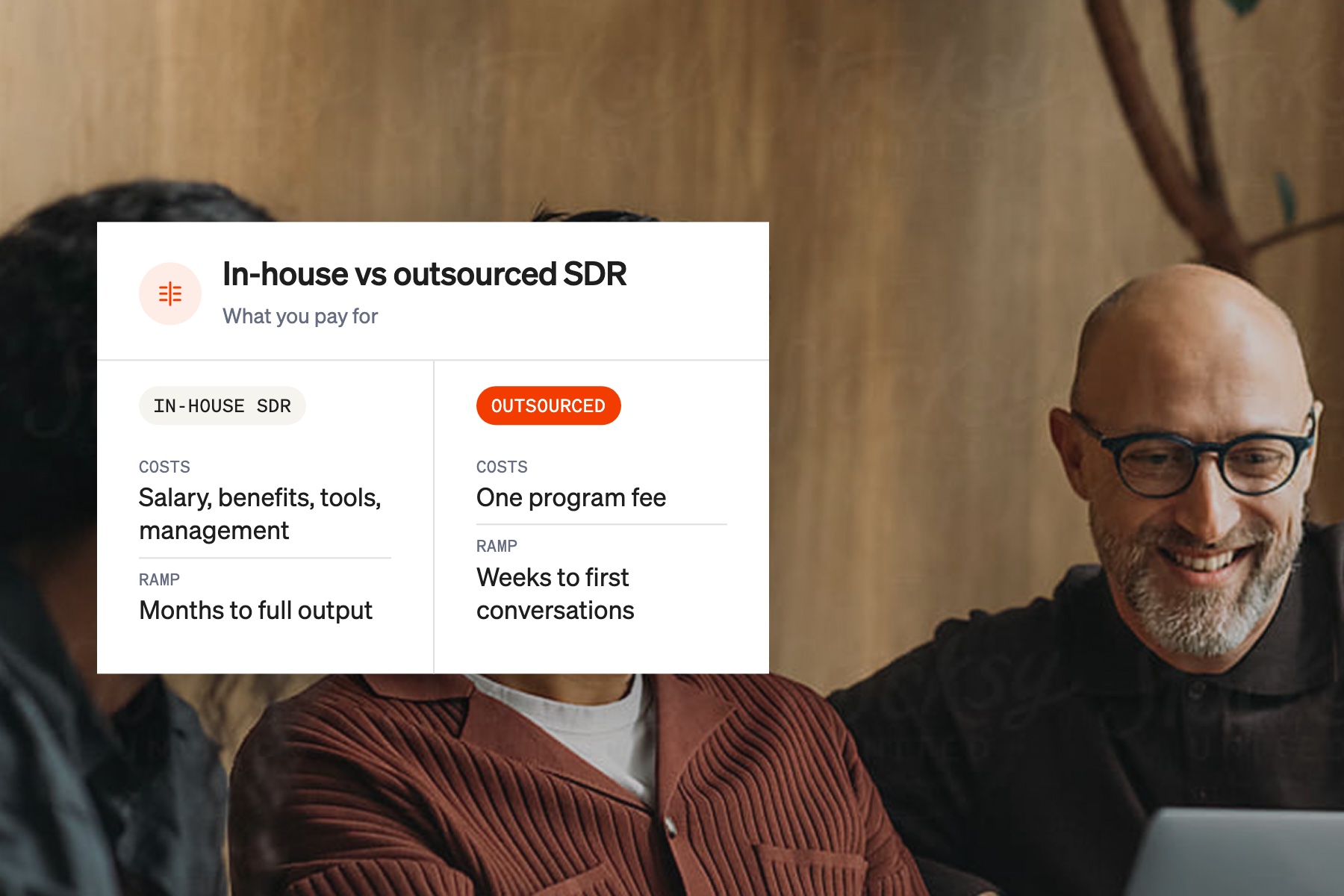
Building in-house gives you the most control and, over a long enough horizon, can cost less per meeting. It also means hiring, training, and managing callers; buying and maintaining data and dialer tools; and absorbing the ramp time before a new rep is productive. For many medical companies, a single fully loaded sales development rep costs more per month than a focused outsourced program, and takes months to reach full output.
Outsourcing trades some control for speed and predictability. A partner already has trained callers, data sources, and a process, so campaigns start producing conversations in weeks rather than quarters. It also protects your closers' time. In every campaign above, the client's own sales team stayed focused on demonstrations and closing while our team carried the cold calling and qualifying. That division of labor is the real argument for outsourcing in healthcare: your specialists sell, and a dedicated US-based cold calling team fills the top of the funnel.
A hybrid is common too. Some clients keep a small internal team for their most strategic accounts and hand the volume work to us, which lets them cover a far larger share of their market than either approach could alone.
How do you stay compliant while prospecting in healthcare?
Compliance in B2B healthcare outreach is more manageable than it first sounds, as long as you keep the lines clear.
Most of the fear around HIPAA does not apply to B2B prospecting, because a well-run outbound campaign never touches protected health information. You are calling a practice or a facility to reach a professional buyer, not handling any patient's records. Keep it that way. Reps should be trained to stay on the business conversation and never solicit or record patient details, even in passing.
What does apply is ordinary calling discipline: honoring do-not-call requests, respecting the standards that govern B2B telephone outreach, keeping accurate records of consent and contact, and representing your company honestly. A good partner builds these controls into the workflow so your brand is never exposed. The goal is simple. Reach the right professional buyers, keep the conversation on the business, and leave patient data entirely out of it.
Frequently asked questions
What is healthcare lead generation in a B2B context?
It is the process of finding and booking qualified sales conversations with the professionals who buy medical products and services: administrators, practice managers, procurement leads, and specialty physicians. In B2B healthcare it is driven mainly by targeted outbound calling, because the buyers rarely respond to inbound marketing.
How many calls does it take to book a healthcare appointment?
On our data, most appointments are set within three connected conversations. About 23% come on the first call, 32% on the second, and 20% on the third, so roughly 75% of meetings are booked by the third attempt. The average appointment takes just under three connected calls.
Why do US-based, native-English callers matter for medical outreach?
Healthcare buyers judge credibility fast. A caller who can speak clearly and hold a real conversation with a specialist gets past the gatekeeper and holds the line; one who sounds scripted or is hard to understand gets screened out. For a medical brand, the caller represents the company, so the quality of that voice affects results and reputation.
Can appointment setting work for medical device and MedTech companies?
Yes, and it fits them especially well. Device buyers are specific clinical decision-makers who are reached by name and by phone, not by web forms. We have booked hundreds of appointments for MedTech clients selling into oncology, radiology, and specialty practices, including 342 demos for a medical documentation platform and 276 appointments for a radiation-oncology laser manufacturer.
Does healthcare outbound risk violating HIPAA?
Not when it is run correctly. B2B prospecting reaches professional buyers and never handles patient data, so it sits outside HIPAA's scope. The controls that matter are ordinary B2B calling discipline: honoring do-not-call requests, keeping honest records, and keeping every conversation on the business.
Ready to fill your medical sales pipeline?
If your team sells into hospitals, health systems, specialty practices, or the medical device market, and the outbound calls are the part that keeps slipping, that is exactly the gap we close. Our US-based BDRs handle the prospecting, calling, and qualifying so your specialists can spend their time closing. See how our B2B appointment setting services work, or schedule a conversation to map a campaign to your market.
sbb-itb-ee13fa1