



B2B sales outsourcing is a fast-growing strategy for companies aiming to scale revenue without the time and costs of building internal teams. Instead of hiring in-house, businesses partner with external sales teams to handle prospecting, lead generation, and even closing deals. This approach can reduce costs, speed up results, and increase efficiency.
Key Takeaways:
- Market Growth: The global sales outsourcing market is expected to grow from $33.3 billion in 2024 to $51.4 billion by 2030.
- Cost Efficiency: Outsourcing can cost $30,000–$96,000 annually, compared to $83,000–$130,000+ for in-house sales reps.
- Faster Ramp-Up: Outsourced teams start delivering results in 2–4 weeks, versus 3–4 months for internal hires.
- Focus Areas: Commonly outsourced tasks include lead generation, appointment setting, and CRM management.
- Models: Businesses can choose between outbound prospecting, full-cycle sales, or channel partnerships based on their needs.
Outsourcing works best for businesses with a clear sales process and defined customer profiles. It frees internal teams to focus on high-value activities like closing deals while external experts handle time-consuming tasks. Whether you’re entering new markets or scaling quickly, outsourced sales can be a practical solution for growth.
Sales Outsourcing: Scaling Your Team Without Hiring
sbb-itb-ee13fa1
What Is B2B Sales Outsourcing?
B2B sales outsourcing involves transferring part or all of your sales operations to an external team that seamlessly integrates with your business. Unlike hiring individual contractors, outsourcing connects you with a team that’s already equipped with skilled professionals, established processes, and the necessary infrastructure to hit the ground running.
The difference lies in how these teams work with your company. They adopt your messaging, value propositions, sales scripts, CRM system, and tech tools to drive results. By aligning with your existing sales framework, they turn what could be seen as a "cost center" into a scalable growth engine. This approach eliminates fixed overhead while providing flexibility to expand as needed.
This model is particularly useful when breaking into new markets, testing a specific vertical, or meeting aggressive quarterly targets. It also frees up your high-performing salespeople from time-consuming administrative tasks, allowing them to focus solely on revenue-driving conversations.
Let’s explore the essential functions these outsourced teams handle to ensure they become an effective extension of your sales process.
Core Functions of Sales Outsourcing
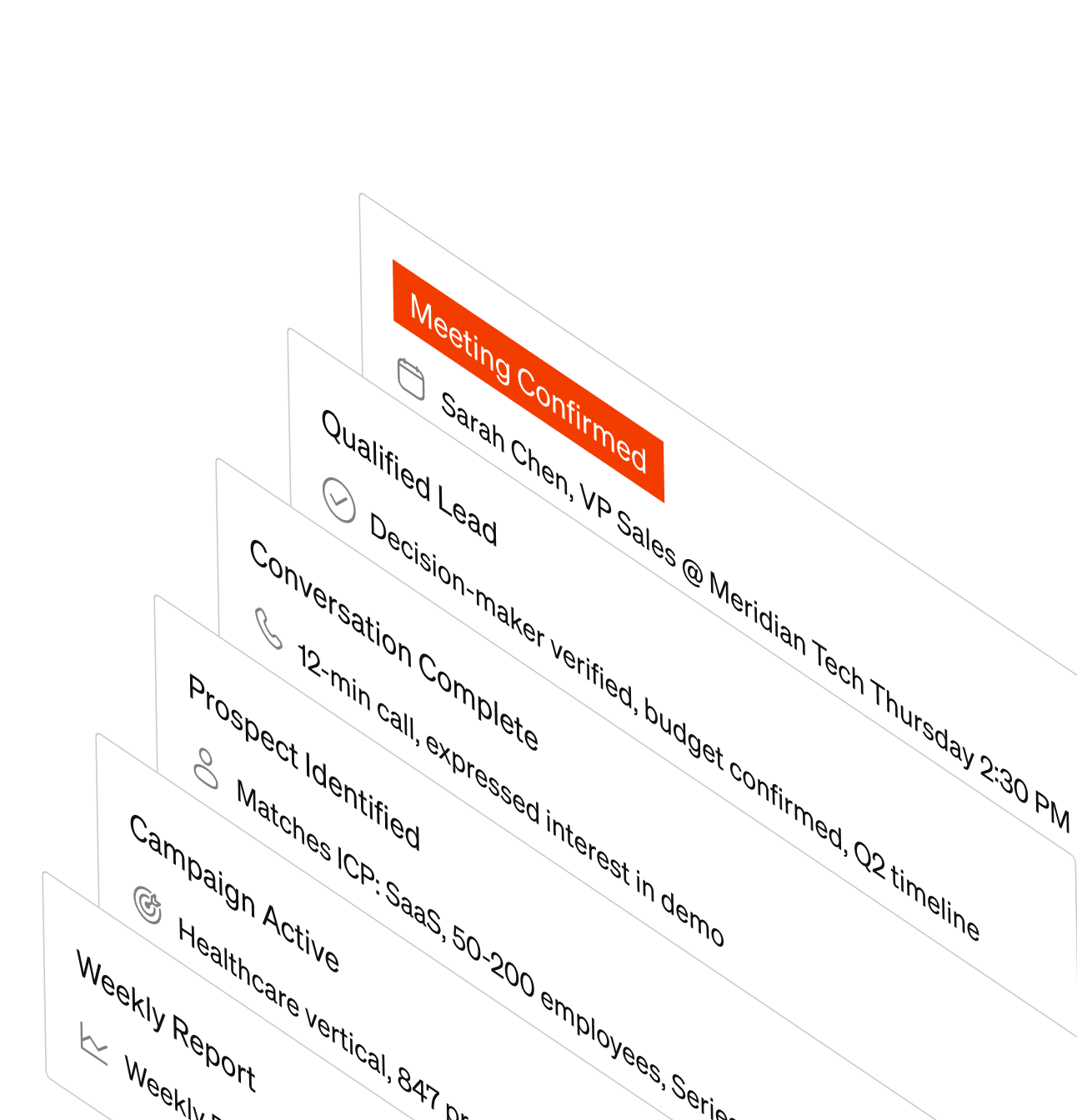
Outsourced sales teams specialize in repetitive, high-volume tasks that drive activity at the top and middle of your sales funnel. The process often begins with prospecting and lead generation – identifying target accounts, compiling prospect lists, and researching key decision-makers. From there, Sales Development Representatives (SDRs) and Business Development Representatives (BDRs) take over with multi-channel outreach through email, LinkedIn, and phone, followed by lead qualification and appointment setting.
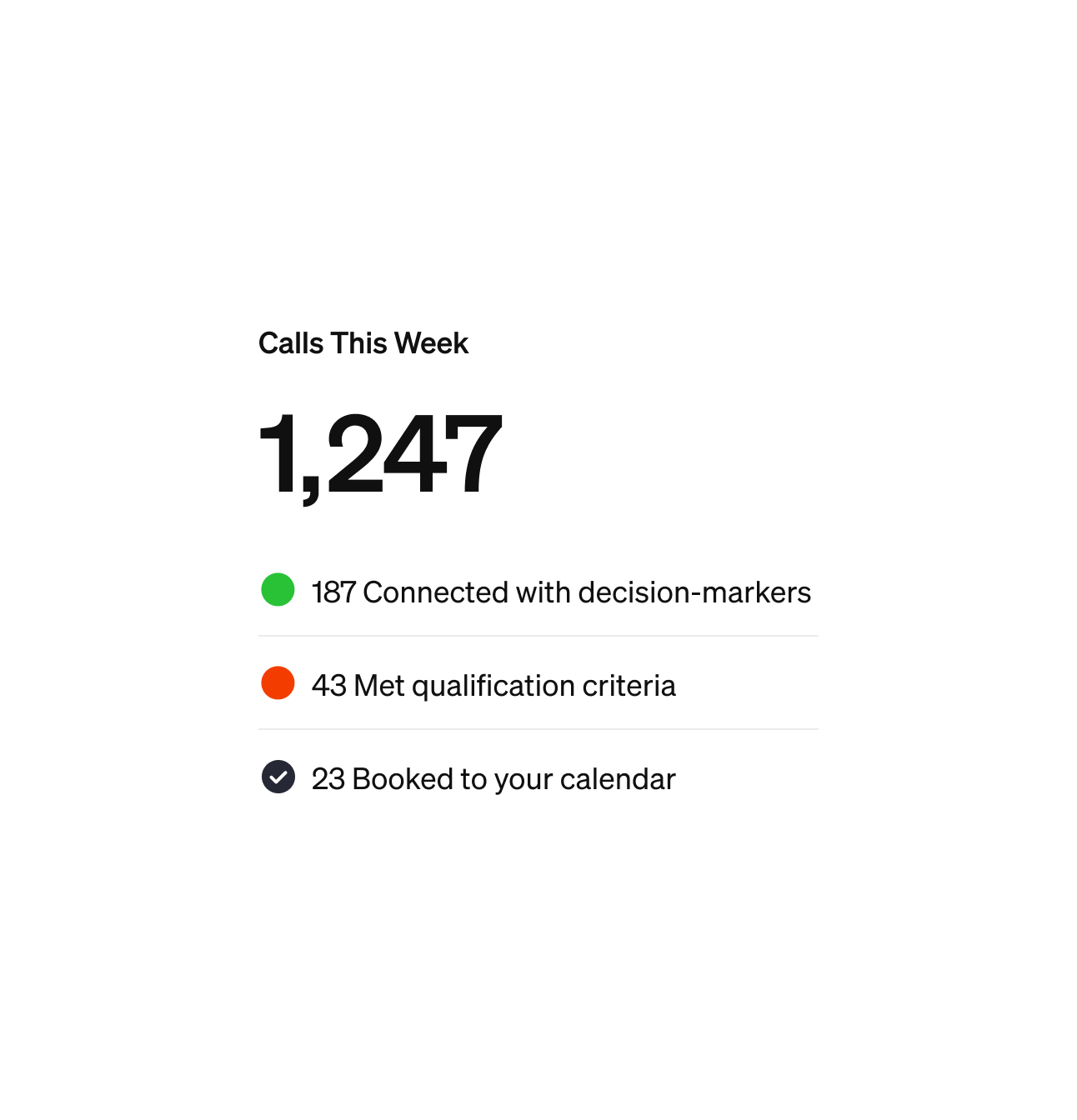
Some companies take it a step further by outsourcing full-cycle sales, where Account Executives manage everything from product demos to negotiations and closing deals. Sales operations tasks, such as CRM upkeep, pipeline management, and performance reporting, are also commonly outsourced to maintain consistency. Professional outsourced teams often achieve a 30% contact rate with decision-makers, with approximately 14.5% of outbound calls leading to meaningful conversations.
What Companies Typically Outsource
Most businesses begin by outsourcing SDR and BDR functions, which focus on generating leads and filling the sales pipeline.
However, certain responsibilities usually remain in-house. These include high-level strategy, defining the core value proposition, and often the final stages of deal closure. This is especially true for early-stage companies that rely on direct customer feedback to refine their offerings. By outsourcing initial prospecting, internal teams can redirect their energy toward closing deals, increasing the time they spend selling from less than 35% to over 90%.
For instance, in 2024–2025, Valpak of Greater Fort Worth outsourced its prospecting efforts to handle the cold outreach phase entirely. Sales Executive Rich Heineman noted that their average closing ratio soared from 11% to 40% because internal reps could focus solely on pre-qualified, high-intent appointments. Similarly, LAP Laser partnered with a US-based business development team, led by Senior Manager Felix Littschwager, to handle cold outreach. This allowed their internal team to skip straight to technical demos with decision-makers.
Types of B2B Sales Outsourcing
Different outsourcing models are designed to tackle specific challenges in the sales process. The right choice depends on where your sales process is struggling and the resources you already have. Some businesses need help generating leads, while others might require a complete sales solution from start to finish.
For instance, if your sales team is bogged down with administrative work, outsourcing lead generation can free them up to focus on closing deals. On the other hand, if you’re entering a new market without an established presence, a full-cycle outsourced sales model might be the way to go. And if you’re exploring new verticals but want to avoid significant costs, channel sales partnerships can provide flexibility.
Outsourced teams can also help navigate unfamiliar markets, allowing your internal team to focus on high-value prospects. This streamlined approach often means qualified leads reach account executives 50% earlier in the buying cycle.
Here’s a breakdown of the three main outsourcing models and the types of companies they benefit most.
Type 1: Outbound Prospecting and Appointment Setting
This model zeroes in on top-of-funnel tasks like lead research, cold outreach, and qualifying prospects. Often referred to as SDR-as-a-Service, it takes care of high-volume, repetitive activities, so your internal team can focus on closing deals.
Speed and precision are the main advantages here. Outsourced teams can maintain a 30% decision-maker contact rate through strategic calling, sometimes making over 12,000 calls a month. They also handle lead research and CRM updates, which means your internal sales reps can dedicate over 90% of their time to selling – compared to less than 35% without this support.
One example of this model’s success is Valpak of Greater Fort Worth. After partnering with an appointment-setting service, they saw their average closing ratio jump from 11% to 40%. This was because their internal team could focus exclusively on pre-qualified, high-intent leads.
This model is ideal for mid-market and enterprise businesses with skilled closers who need more pipeline volume. However, if addressing only the top-of-funnel isn’t enough, a more integrated approach might be necessary.
Type 2: Full-Cycle Outsourced Sales
Full-cycle outsourcing covers everything – from lead generation to closing deals. Essentially, the external partner acts as your entire sales team.
This model is particularly effective when entering new markets without a local presence or when startups lack the resources to build an internal sales team. It’s also a great way to test new product lines or verticals without committing to long-term hiring.
However, there are trade-offs. Early-stage companies might miss out on valuable customer feedback if an external team handles all interactions. Plus, there’s a risk of losing your brand’s unique voice if the partner doesn’t fully understand your product.
TEL Education provides a good example of this model in action. CEO Fred Dohmann used a hybrid approach, combining an outsourced sales team with internal strategic oversight. The result? Sales doubled year-over-year.
Type 3: Channel Sales Partnerships
For companies where direct selling isn’t feasible, channel sales partnerships offer an alternative. This model leverages external partner networks – like resellers, distributors, or strategic alliances – to reach new customer segments or geographic areas.
Outsourced business development representatives often manage these relationships, handle account planning, and re-engage warm leads. This approach is especially effective for niche markets or regions where building a direct sales team would be too expensive.
That said, maintaining quality control can be tricky. Partners often juggle multiple products, so ensuring they prioritize yours requires clear incentives and ongoing management.
This model works best for businesses with indirect sales strategies or those testing new markets without major in-house investments. It’s also useful when local expertise or regulatory knowledge is essential.
| Model Type | Primary Goal | Best For | Key Metric |
|---|---|---|---|
| Type 1: Appointment Setting | Top-of-funnel pipeline | Mid-market/Enterprise with existing closers | Qualified Meetings/SQLs |
| Type 2: Full-Cycle Sales | End-to-end revenue | New market entry or lean startups | Closed-Won Revenue |
| Type 3: Channel Partnerships | Indirect market expansion | Niche segments or new regions | Partner-sourced pipeline |
The Financial Case for Outsourcing Sales

In-House vs Outsourced Sales: Cost Comparison and ROI Analysis
When evaluating the cost of hiring an in-house Sales Development Representative (SDR), the salary is just the tip of the iceberg. While a $70,000 base salary might seem straightforward, the actual annual cost jumps to around $116,000 when you factor in employer taxes, benefits, recruiting expenses, software licenses, and management overhead. And that’s not even considering the three to four months it typically takes for a new hire to become fully productive.
"An in-house hire is an iceberg. You see the salary, but it’s the 90% of hidden costs underwater that will sink your ship." – LatHire
On the other hand, outsourcing sales can significantly lower costs. Outsourced services generally charge monthly retainers between $2,500 and $15,000, depending on the scope and team size. Annually, this translates to $30,000 to $180,000 – often less than the fully loaded cost of an in-house SDR. Plus, outsourced teams can hit the ground running within two to four weeks, compared to the 12 to 20 weeks needed to hire and onboard an internal representative.
Another major advantage is efficiency. In-house reps spend less than 35% of their time on selling activities, with the rest consumed by tasks like data entry, CRM updates, and internal meetings. Outsourced models, however, allow internal closers to dedicate over 90% of their time to pre-qualified leads.
Cost Comparison: In-House vs. Outsourced
Here’s a breakdown of the typical costs for an in-house SDR compared to an outsourced sales service:
| Cost Component | In-House SDR (US) | Outsourced SDR Service |
|---|---|---|
| Base Salary / Fee | $45,000 – $70,000 | $30,000 – $96,000 (All-in) |
| Benefits & Taxes | $15,000 – $21,000 | $0 |
| Recruiting & Onboarding | $5,000 – $15,000 | Included |
| Management & Overhead | $10,000 – $15,000 | Included |
| Sales Tech Stack & Data | $3,000 – $6,000 | Included |
| Total Annual Cost | $83,000 – $130,000+ | $30,000 – $96,000 |
In addition to lower fixed costs, outsourcing often delivers better efficiency. For example, the cost-per-meeting for in-house teams ranges from $821 to $1,150, while outsourced services typically bring that down to $357 to $500. Companies that outsource lead generation report up to 43% higher ROI compared to those managing the process internally.
Outsourcing also becomes more cost-effective over time. In the first year, costs per meeting might range from $3,000 to $5,000, but as messaging and targeting improve, these costs can decrease by about 50% in the second year and another 25% in the third year.
Break-Even Analysis Framework
To fully understand the financial benefits of outsourcing, it’s essential to move beyond simple headcount comparisons and focus on metrics like cost-per-meeting and pipeline ROI.
Here’s a simple formula to calculate the cost of setting an appointment (CPM):
Monthly Cost ÷ Qualified Meetings Delivered = CPM.
For instance, if you’re spending $5,000 per month and receiving 14 qualified meetings, your CPM is $357. Compare that to the CPM of your in-house team, which includes their fully loaded costs divided by their monthly meeting output.
Next, assess your pipeline ROI using this formula:
Meetings × Held % × SQL % × Avg Deal Value × Close %.
For example, if an outsourced team delivers 24 meetings per month, with 70% of those meetings held, 35% converting to SQLs, an average deal value of $22,000, and a close rate of 18%, the resulting monthly pipeline revenue would be approximately $66,000.
However, outsourcing isn’t a one-size-fits-all solution. If your company struggles to define its Ideal Customer Profile (ICP) or lacks experience selling the product, outsourcing could lead to wasted resources.
"You cannot outsource a problem you don’t understand. An outsourced sales team is an amplifier, not a miracle worker." – LatHire
Outsourcing works best when you have a proven sales process, a clear ICP, and internal closers who need a steady stream of qualified leads. In these cases, outsourcing can reduce operating expenses by 35% to 65% while delivering a higher ROI. By cutting overhead and speeding up the sales pipeline, outsourcing becomes a powerful tool for scaling growth.
How to Evaluate a B2B Sales Outsourcing Partner
Choosing the right sales outsourcing partner can significantly impact your growth trajectory. A well-vetted partner can drive results, while a poor choice may cost you time, money, and opportunities. Here’s how to assess potential partners effectively.
Partner Evaluation Criteria
Start by examining their B2B sales specialization. A reliable partner should excel in handling complex sales processes, long sales cycles, and strategies involving multiple decision-makers. Avoid generic telemarketing firms – they often lack the expertise needed to engage high-level buyers. For example, human-powered appointment setting has been shown to achieve a 30% decision-maker contact rate and convert 9.25% of those conversations into qualified appointments.
Next, prioritize CRM transparency. Insist on full access to activity logs, call recordings, and pipeline data in real time. If a partner restricts this visibility, it’s a red flag. Transparency is critical for efficient onboarding and maintaining control over your sales pipeline.
Evaluate their onboarding and enablement process. A good partner will have a detailed plan for understanding your product, identifying your ideal customer profile (ICP), and training their team on objection handling. Ask for specifics about their onboarding timeline and training methods. Vague answers are a warning sign. For instance, TEL Education’s CEO Fred Dohmann shared how using a tiered sales service from Leads at Scale allowed their team to focus on strategic tasks, resulting in doubled sales year-over-year.
Look for dedicated management and coaching. Your partner should provide daily leadership and active coaching to their team. High employee retention within the agency is another positive indicator, as it suggests consistent performance and less wasted effort on training. The best partners don’t just execute – they actively recommend ways to improve messaging and targeting.
"Our experience with the Leads at Scale team has yielded consistently positive results… Their professionalism on calls is marked by exceptional preparation and impressive listening and speaking skills."
– Felix Littschwager, Senior Manager, Inside Sales, LAP Laser
Don’t overlook technology integration. Ask about the partner’s tech stack (e.g., ZoomInfo, Salesloft, HubSpot) and ensure it syncs seamlessly with your existing systems to avoid data silos. They should also deliver qualified appointments directly to your team’s calendars, complete with detailed prospect insights.
Once you’ve confirmed these capabilities, stay alert for potential red flags.
Red Flags to Avoid
Be wary of partners making unrealistic guarantees, such as promises to "triple revenue in 30 days". Such claims often indicate a lack of understanding of the complexities of B2B sales. Similarly, avoid partners with a volume-driven approach that prioritizes sheer activity over lead quality. This strategy can quickly exhaust prospect lists and harm your brand’s reputation.
Another red flag is unclear performance metrics. If a partner can’t clearly define what constitutes a "qualified lead" or "sales-qualified meeting", you’re likely to encounter misaligned expectations. Ask about their strategy for handling a "bad month." A dependable partner will suggest solutions like A/B testing or data analysis rather than blaming external factors.
Finally, steer clear of partners who expect you to provide all software licenses or who lack their own proven tools. Some may try to "rent" you the pipeline, creating dependency and limiting your ability to build long-term sales assets.
To mitigate risks, implement a 90-day pilot program before committing to a long-term contract.
"A 90-day pilot is the ultimate truth serum. It forces a partner to deliver real results quickly, not just promises."
– LatHire
This trial period allows you to assess lead quality, technical compatibility, and overall fit without locking into an extended agreement.
Implementation: Getting Started with Sales Outsourcing
Once you’ve chosen your outsourcing partner, it’s time to roll out a structured plan. A phased approach ensures smooth implementation, leveraging cost savings and a quick ramp-up to support growth effectively.
Phase 1: Define ICP and Align Target Lists
Start by documenting your Ideal Customer Profile (ICP) in detail. Specify target industries, company size, job roles, and key buying triggers. For instance, if you sell marketing automation tools, your ICP might look like this: "B2B SaaS companies with 50–200 employees, $5M–$50M in revenue, targeting VP of Marketing or Director of Demand Generation." Highlight common pain points, such as "manual lead scoring challenges" or "reliance on disconnected tools." This clarity ensures your outsourced team knows exactly who to target and why.
Phase 2: Develop Messaging and Scripts
Once your ICP is nailed down, shift focus to crafting effective messaging. Spend the first two weeks training your partner on your product, covering value propositions, brand voice, and how to handle objections. Offer live product demos to deepen their understanding. Collaborate on multi-channel scripts for email, LinkedIn, and phone outreach. While your partner drafts the initial messaging, you should review and approve every detail before it goes live. Monitor early calls and review the first batch of emails (20–30) to ensure the tone aligns with your brand and resonates with your audience.
Phase 3: Run a Pilot Program
A 90-day pilot program is critical.
"A 90-day pilot is the ultimate truth serum. It forces your new partner to deliver results quickly and gives you an easy out if they don’t".
Focus the pilot on 1–2 high-priority ICP segments to gather insights and fine-tune the process. Instead of just tracking activity metrics, prioritize qualified meetings booked and Account Executive (AE) acceptance rates. Hold weekly feedback sessions with your AEs to assess lead quality and suggest adjustments. While full campaigns can launch within 30 days, expect a 60–90 day optimization phase before everything runs smoothly. Once the pilot confirms your strategy works, you can shift gears to scaling the program.
Phase 4: Scale and Optimize
After a successful pilot, scale the program methodically. This could mean increasing SDR capacity, expanding into new regions, or adding more outreach channels. To maintain quality, scale in manageable steps. Focus on metrics like qualified meetings, pipeline value, and opportunity conversion rates.
"If you track dials and emails, you’ll get dials and emails – measure vendors on pipeline and opportunity conversion, and you’ll get real revenue outcomes".
Treat your outsourced team like part of your internal salesforce. Include them in sales meetings, share success stories, and give them access to your CRM. The more integrated they feel, the better they’ll represent your brand and contribute to sustained growth.
Measuring Sales Outsourcing Success
Once your outsourced sales program is up and running, the big question is: is it delivering results? The answer lies in the metrics you choose to track – and how well you analyze them.
Activity Metrics vs. Outcome Metrics
Activity metrics capture effort: the number of calls made, emails sent, LinkedIn messages delivered, and CRM updates logged. These figures show whether your partner is actively reaching out to prospects through outbound calling and follow-up. On the other hand, outcome metrics focus on results: qualified meetings scheduled, Sales Qualified Leads (SQLs) generated, pipeline value added, and deals closed.
But here’s the thing – activity alone doesn’t translate into meaningful opportunities. As SalesHive explains:
"If you track dials and emails, you’ll get dials and emails – measure vendors on pipeline and opportunity conversion, and you’ll get real revenue outcomes".
One essential metric to monitor is the AE acceptance rate, which verifies whether the meetings booked by your outsourced team are genuinely qualified. This helps ensure they understand your Ideal Customer Profile (ICP) and are delivering real opportunities, not just filling up calendars. Another critical metric is cost-per-opportunity, which calculates your total outsourcing spend divided by the number of legitimate sales opportunities created. This provides a more accurate ROI picture than simply looking at monthly fees.
For a complete view of success, you also need detailed pipeline attribution.
Pipeline Attribution and ROI
Tracking effort and immediate results is helpful, but understanding how revenue moves through the pipeline is just as important. Measure the entire sales cycle – from booked meetings to SQLs, opportunities, and closed deals. To make this easier, ensure your outsourced partner works directly in your CRM system, whether it’s HubSpot, Salesforce, or another tool. This way, every interaction, contact, and opportunity is logged, giving you full visibility into the process.
Compare the costs of outsourcing to the fully loaded cost of in-house hiring, which includes salary, 30% for benefits and taxes, software licenses (around $5,000 annually), and management overhead. Companies that outsource lead generation often see up to 43% higher ROI than those handling it internally. Some even report a 300% ROI once the program is fully optimized. Additionally, track the ramp-to-productivity time – outsourced teams typically start generating meetings within 30–45 days, compared to the 3.2-month average for in-house hires.
To ensure accountability, include outcome-based SLAs in your contract. These could specify a minimum number of qualified meetings per month or target opportunity conversion rates. Regular quality assurance is also key: review call recordings, check email messaging, and hold feedback sessions with your Account Executives weekly. This helps maintain lead quality and refine strategies for sustainable revenue growth.
Conclusion
B2B sales outsourcing has evolved from being merely a cost-cutting measure to becoming a key driver of growth for mid-market companies. The numbers speak for themselves: outsourced teams not only ramp up faster than in-house hires but also dedicate over 90% of their time to actual selling activities. Compare that to the less than 35% typically spent by internal sales reps, and the efficiency becomes clear. With the market expected to grow from $96 billion in 2023 to nearly $180 billion by 2031, it’s no surprise that more businesses are turning to specialized, human-driven prospecting solutions.
The real success of sales outsourcing lies in choosing the right partner and approach. Whether your business needs outbound prospecting, full-cycle sales support, or help with channel partnerships, the foundation for success is the same: a well-defined Ideal Customer Profile (ICP), transparent processes, and measurable, outcome-focused goals. As HireInSouth aptly put it:
"B2B sales outsourcing isn’t about giving up control. It’s about building a smarter, faster, and more flexible way to grow revenue".
By targeting the right prospects and optimizing efficiency, outsourcing helps companies overwhelmed by low-quality leads or bogged down by cold-calling tasks. This frees up internal teams to focus on higher-value activities like closing deals and hosting product demos. Professional outbound teams consistently deliver better engagement and higher conversion rates.
At Leads at Scale, our US-based Business Development Specialists handle everything from prospecting and qualification to appointment setting. On average, our clients experience a 181% increase in sales opportunities, with qualified appointments conveniently added to their calendars. Schedule a discovery call today to explore how we can create a tailored lead generation strategy for your business.
The real question isn’t whether you should outsource – it’s whether you can afford not to.
FAQs
How do I know if my company is ready to outsource B2B sales?
If your sales team is swamped with tasks like prospecting or data entry and struggling to focus on closing deals, it might be time to consider outsourcing your B2B sales. Outsourcing can be a smart move when you’re looking to scale quickly, break into new markets, or streamline operations – without the hassle and expense of hiring and training new in-house staff. It also gives you access to seasoned experts and advanced tools, helping you accelerate growth more efficiently.
What should I include in a 90-day sales outsourcing pilot?
A 90-day sales outsourcing pilot requires clear goals, teamwork, and ongoing adjustments to succeed. Start by setting specific KPIs – like the number of leads generated, meetings scheduled, or pipeline growth. Make sure everyone is on the same page about your ideal customer profile and target list.
Next, create customized scripts that resonate with your audience. Roll out a focused outreach campaign over 30 to 60 days, and schedule regular check-ins to review progress and make improvements along the way.
At the end of the pilot, compare the outcomes to your initial KPIs. Use these insights to decide whether to expand the program, refine it, or pivot your approach entirely.
How do I measure ROI from sales outsourcing services?
To gauge ROI from sales outsourcing, focus on two key areas: activity-based metrics and outcome-based results. For activity-based metrics, track things like the number of qualified leads generated or appointments scheduled. Outcome-based results, on the other hand, should include metrics such as deals closed and revenue generated.
Compare the cost of outsourcing with the fully loaded expense of maintaining in-house SDRs, which typically ranges from $65,000 to $90,000 per year. This comparison will help you understand the financial trade-offs.
Make it a point to regularly evaluate performance. Use detailed reports and conduct quarterly business reviews to ensure the partnership stays aligned with your goals and delivers the results you’re aiming for. This ongoing analysis is key to refining the process and maximizing value.